Reporter's file/ A Palestinian story/ 09/ 10 /2009:
Report on the 30-minute animated film Fatenah, the story of a Palestinian woman who died of cancer as Israel (the occupying power obligated to provide medical aid for the people under its occupation) refused to allow her entry into Israeli hospitals.
Palestine Video - A Palestine Vlog
Showing posts with label Health Crisis. Show all posts
Showing posts with label Health Crisis. Show all posts
Friday, September 11, 2009


Thursday, September 10, 2009
Remember the children of Palestine/ Health & Education conditions worse in Gaza (2 Parts)
Remember the children of Palestine/ War effects on children/09/ 08 /2009 /Part1:
Related News
Palestinian child dies due the siege on Gaza, death toll 352
Source: IMEMC
Date: September 09, 2009
A Palestinian child was announced dead on Wednesday after she was prevented from leaving the Gaza Strip for medical care she needed.
Dinna Al Zakzok, seven years old, had Lymphatic gland tumor, he family had completed all needed documents to leave Gaza but still the Israeli military did not allow he to leave.
The Palestinian Ministry of Health in Gaza announced that the number of patients who died in Gaza due to the Israeli siege have now reached 352.
Israel placed the Gaza Strip under total siege in June of 2006 leaving the 1.5 million Palestinians living there lacking medial, food, and fuel supplies.
Part 1
Health conditions are worse in Gaza
Part 2
The same as above goes for education in Gaza
OPT: Gaza schoolchildren lack basic equipment
Source: IRINNEWS.ORG
GAZA CITY, 9 September 2009 (IRIN) - Some 1,200 students at al-Karmel High School for boys in Gaza City returned to class on 25 August without history and English textbooks, or notebooks and pens - all unavailable on the local market.
Severe damage to the school - caused during the 23-day Israeli offensive on the Gaza Strip which ended on 18 January - has yet to be repaired. Al-Karmel’s principal, Majed Yasin, has had to cover scores of broken windows with plastic sheeting.
“The entire west side of the school was damaged adjacent to Abbas police station which was targeted on 27 December,” said Yasin. “We have yet to repair the US$65,000-worth of damage, since glass and other building materials are still unavailable.”
Educational institutions across Gaza are still reeling from the effects of the Israeli offensive, compounded by the more than two-year Israeli blockade (tightened after Hamas seized power in June 2007), according to the UN Office for the Coordination of Humanitarian Affairs (OCHA).
At least 280 schools out of 641 in Gaza were damaged and 18 destroyed during the military operation. None have been rebuilt or repaired to date due to continued restrictions on the entry of construction materials, OCHA reported.
At the start of the new school year, all 387 government-run primary and secondary schools serving 240,000 students - and 33 private sector schools serving 17,000 students - lack essential education materials, according to the education ministry in Gaza.
Half of all students lack at least one textbook for their coursework this term, the ministry said.
“The war had, and continues to have, a severely negative impact on the entire education system,” Yousef Ibrahim, deputy education minister in Gaza, said. “About 15,000 students from government schools have been transferred to other schools for second shifts, significantly shortening class time.”
He said the damaged schools lacked toilets and water and electricity networks; their classrooms were overcrowded, and they also suffered from shortages of basic items such as desks, doors, chairs and ink for printing.
UNRWA schools affected
More than 80 percent of government-run schools and those run by the UN agency for Palestinian refugees (UNRWA) now have a second shift, according to Ibrahim.
The 221 primary and secondary schools run by UNRWA (in addition to government and privately run schools) are also struggling to accommodate 200,000 students this school year.
“We have only provided the minimum amount of stationery and textbooks to our students, since it is very difficult to bring in these materials and they are unavailable on the local market,” said UNRWA spokesperson Milina Shahin in Gaza.
UNRWA schools are also missing items such as lab equipment, calculators, desks, tables, chairs, and even crayons, said Shahin.
UNRWA planned to build 100 new schools this year, but has had to give up the idea due to a lack of building materials. Thirty-five UNRWA schools are still without windows as a result of the offensive, due to a lack of glass, Shahin said.
“There is no generator at al-Karmel High. The lack of electricity, often all day, is a real challenge for our teachers,” said al-Karmel principal Yasin.
Truckloads of stationery await clearance
Since the beginning of 2009, Israel has allowed 174 truckloads of educational materials to enter Gaza. Of these, only two were carrying stationery, in July and August, OCHA said.
According to the Palestine Trade Centre (PalTrade) and local suppliers, there are nearly 120 truckloads of stationery awaiting clearance to enter.
Ghazi Hamad, head of borders and crossings under the Hamas-led government in Gaza, said some educational materials, such as notebooks and clothing, had entered Gaza via underground tunnels from Egypt, but this was only a token amount.
Teaching has also been affected by the Fatah-Hamas rift: Of the 11,000 teachers in Gaza, 7,000 are employed by the Palestinian Authority in Ramallah (West Bank). Half of these did not return to teach this school year, according to deputy education minister Ibrahim.
“We had to replace them with less qualified teachers, while they chose to stay at home,” he said.
es/ed/cb
Palestine Video - A Palestine Vlog
Related News
Palestinian child dies due the siege on Gaza, death toll 352
Source: IMEMC
Date: September 09, 2009
A Palestinian child was announced dead on Wednesday after she was prevented from leaving the Gaza Strip for medical care she needed.
Dinna Al Zakzok, seven years old, had Lymphatic gland tumor, he family had completed all needed documents to leave Gaza but still the Israeli military did not allow he to leave.
The Palestinian Ministry of Health in Gaza announced that the number of patients who died in Gaza due to the Israeli siege have now reached 352.
Israel placed the Gaza Strip under total siege in June of 2006 leaving the 1.5 million Palestinians living there lacking medial, food, and fuel supplies.
Part 1
Health conditions are worse in Gaza
Part 2
The same as above goes for education in Gaza
OPT: Gaza schoolchildren lack basic equipment
Source: IRINNEWS.ORG
GAZA CITY, 9 September 2009 (IRIN) - Some 1,200 students at al-Karmel High School for boys in Gaza City returned to class on 25 August without history and English textbooks, or notebooks and pens - all unavailable on the local market.
Severe damage to the school - caused during the 23-day Israeli offensive on the Gaza Strip which ended on 18 January - has yet to be repaired. Al-Karmel’s principal, Majed Yasin, has had to cover scores of broken windows with plastic sheeting.
“The entire west side of the school was damaged adjacent to Abbas police station which was targeted on 27 December,” said Yasin. “We have yet to repair the US$65,000-worth of damage, since glass and other building materials are still unavailable.”
Educational institutions across Gaza are still reeling from the effects of the Israeli offensive, compounded by the more than two-year Israeli blockade (tightened after Hamas seized power in June 2007), according to the UN Office for the Coordination of Humanitarian Affairs (OCHA).
At least 280 schools out of 641 in Gaza were damaged and 18 destroyed during the military operation. None have been rebuilt or repaired to date due to continued restrictions on the entry of construction materials, OCHA reported.
At the start of the new school year, all 387 government-run primary and secondary schools serving 240,000 students - and 33 private sector schools serving 17,000 students - lack essential education materials, according to the education ministry in Gaza.
Half of all students lack at least one textbook for their coursework this term, the ministry said.
“The war had, and continues to have, a severely negative impact on the entire education system,” Yousef Ibrahim, deputy education minister in Gaza, said. “About 15,000 students from government schools have been transferred to other schools for second shifts, significantly shortening class time.”
He said the damaged schools lacked toilets and water and electricity networks; their classrooms were overcrowded, and they also suffered from shortages of basic items such as desks, doors, chairs and ink for printing.
UNRWA schools affected
More than 80 percent of government-run schools and those run by the UN agency for Palestinian refugees (UNRWA) now have a second shift, according to Ibrahim.
The 221 primary and secondary schools run by UNRWA (in addition to government and privately run schools) are also struggling to accommodate 200,000 students this school year.
“We have only provided the minimum amount of stationery and textbooks to our students, since it is very difficult to bring in these materials and they are unavailable on the local market,” said UNRWA spokesperson Milina Shahin in Gaza.
UNRWA schools are also missing items such as lab equipment, calculators, desks, tables, chairs, and even crayons, said Shahin.
UNRWA planned to build 100 new schools this year, but has had to give up the idea due to a lack of building materials. Thirty-five UNRWA schools are still without windows as a result of the offensive, due to a lack of glass, Shahin said.
“There is no generator at al-Karmel High. The lack of electricity, often all day, is a real challenge for our teachers,” said al-Karmel principal Yasin.
Truckloads of stationery await clearance
Since the beginning of 2009, Israel has allowed 174 truckloads of educational materials to enter Gaza. Of these, only two were carrying stationery, in July and August, OCHA said.
According to the Palestine Trade Centre (PalTrade) and local suppliers, there are nearly 120 truckloads of stationery awaiting clearance to enter.
Ghazi Hamad, head of borders and crossings under the Hamas-led government in Gaza, said some educational materials, such as notebooks and clothing, had entered Gaza via underground tunnels from Egypt, but this was only a token amount.
Teaching has also been affected by the Fatah-Hamas rift: Of the 11,000 teachers in Gaza, 7,000 are employed by the Palestinian Authority in Ramallah (West Bank). Half of these did not return to teach this school year, according to deputy education minister Ibrahim.
“We had to replace them with less qualified teachers, while they chose to stay at home,” he said.
es/ed/cb
Palestine Video - A Palestine Vlog
Thursday, January 1, 2009
HR Activist Caoimhe Butterly on Gaza Health Crisis
Activist, Caoimhe Butterly, comments on Gaza crises:
"01.01.2009
http://www.presstv.ir/
Caoimhe is a renowned human rights activist and Gaza Coordinator for the Free Gaza Movement. She will be remaining in Gaza to do human rights monitoring, assist with relief efforts, and work on project development with Free Gaza."
Palestine Video - A Palestine Vlog
"01.01.2009
http://www.presstv.ir/
Caoimhe is a renowned human rights activist and Gaza Coordinator for the Free Gaza Movement. She will be remaining in Gaza to do human rights monitoring, assist with relief efforts, and work on project development with Free Gaza."
Palestine Video - A Palestine Vlog
Tuesday, December 30, 2008
Israel attacks Cynthia Mckinney's Boat
Israel attacks Cynthia Mckinney's Boat:
"http://www.youtube.com/watch?v=DL8Lc-... Israeli attack plesure boats full with health supplies as Cynthia remembers the USS Liberty..If u dont know about this event..Then follow the links http://whatreallyhappened.com/WRHARTI... PS:If the title offends you..Then Im sorry..But I call them like I see them..Attacking a leisure vessel is Pretty dirty"
Palestine Video - A Palestine Vlog
"http://www.youtube.com/watch?v=DL8Lc-... Israeli attack plesure boats full with health supplies as Cynthia remembers the USS Liberty..If u dont know about this event..Then follow the links http://whatreallyhappened.com/WRHARTI... PS:If the title offends you..Then Im sorry..But I call them like I see them..Attacking a leisure vessel is Pretty dirty"
Palestine Video - A Palestine Vlog
Damaged Gaza aid boat docks in southern Lebanon - 30 Dec 08
Damaged Gaza aid boat docks in southern Lebanon - 30 Dec 08:
"A boat carrying humanitarian aid to Gaza has arrived in Lebanon after being turned back by the Israeli navy.
The Dignity set off from Cyprus on Monday carrying three tons of emergency and medical supplies.
Activists on board say it was rammed by an Israeli ship but the navy says it was an accident.
Mohammed Vall reports."
Press TV Report
Palestine Video - A Palestine Vlog
"A boat carrying humanitarian aid to Gaza has arrived in Lebanon after being turned back by the Israeli navy.
The Dignity set off from Cyprus on Monday carrying three tons of emergency and medical supplies.
Activists on board say it was rammed by an Israeli ship but the navy says it was an accident.
Mohammed Vall reports."
Press TV Report
Palestine Video - A Palestine Vlog
Israel attacks Dignity aid-boat to Gaza
dignity aid boat hit:
An Israeli navy vessel Rams the "Dignity" boat in international waters as it headed to Gaza on a medical aid mission.
Palestine Video - A Palestine Vlog
An Israeli navy vessel Rams the "Dignity" boat in international waters as it headed to Gaza on a medical aid mission.
Palestine Video - A Palestine Vlog
Monday, December 29, 2008
Free Gaza movement to defy Gaza blockade
Free Gaza movement to defy blockade:
"12-30-2008"
Former US Congresswoman and Presidential Candidate Cynthia Mckinney is on the Aid Boat to Gaza.
Passengers List (Dignity has left Cyprus)
Source: FreeGaza
Date : 12-29-2008
(UK) Denis Healey, Captain
Captain of the Dignity, Denis has been involved with boats for 45 years, beginning with small fishing boats in Portsmouth. He learned to sail while atschool and has been part of the sea ever since. He's a certified yachtmaster and has also worked on heavy marine equipment from yachts to large dredgers. This is his fourth trip to Gaza.
(Greece) Giorgios Klontzas, Relief Captain
Cpt. Klontzas is an experienced sailor and human rights activist. This will be his fourth trip to Gaza.
(Greece) Nikolas Bolos, First Mate
Nikolas is a chemical engineer and human rights activist. He has served as a crewmember on several Free Gaza voyages, including the first one in August.
(Jordan) Othman Abu Falah
Othman is a senior producer with Al-Jazeera Television. He will remain in Gaza to report on the ongoing military onslaught.
(Australia) Renee Bowyer
Renee is a schoolteacher and human rights activist. She will remain in Gaza to do human rights monitoring and reporting.
(Ireland) Caoimhe Butterly
Caoimhe is a reknowned human rights activist and Gaza Coordinator for the Free Gaza Movement. She will be remaining in Gaza to do human rights monitoring, assist with relief efforts, and work on project development with Free Gaza.
(Cyprus) Ekaterini Christodulou
Ekaterini is a well-known and respected freelance journalist in Cyprus. She is traveling to Gaza to report on the conflict.
(Sudan) Sami El-Haj
Sami is a former detainee at Guantanamo Bay, and head of the human rights section at Al-Jazeera Television. He will remain in Gaza to report on the ongoing military onslaught.
(UK) Dr. David Halpin
Dr. Halpin is an experienced orthopaedic surgeon, medical professor, and ship's captain. He has organized humanitarian relief efforts in Gaza on several occasions with the Dove and Dolphin. He is traveling to Gaza to volunteer in hospitals and clinics.
(Germany) Dr. Mohamed Issa
Dr. Issa is a pediatric surgeon from Germany. He is traveling to Gaza to volunteer in hospitals and clinics.
(UK/Tunisia) Fathi Jaouadi
Fathi is a television producer and human rights activist. He will remain in Gaza to do human rights monitoring and reporting.
(USA) Cynthia McKinney
Cynthia is a former U.S. Congresswoman from Georgia, and the 2008 Green Party presidential candidate. She is traveling to Gaza to assess the ongoing conflict.
(Cyprus) Martha Paisi
Martha is a senior research fellow and experienced human rights activist. She is traveling to Gaza to do human rights work and to assist with humanitarian relief efforts.
(UK) Karl Penhaul
Karl Penhaul is a video correspondent for CNN, based out of Bogotá, Colombia. Appointed to this position in February 2004, he covers breaking news around the world utilizing CNN's new laptop-based 'Digital Newsgathering' system. He is traveling to Gaza to report on the ongoing conflict.
(Iraq) Thaer Shaker
Thaer is a cameraman with Al-Jazeera television. He will remain in Gaza to report on the ongoing military onslaught.
(Cyprus) Dr. Elena Theoharous, MP
Dr. Theoharous is a surgeon and a Member of the Cypriot Parliament. She is traveling to Gaza to assess the ongoing conflict, assist with humanitarian relief efforts, and volunteer in hospitals.
Palestine Video - A Palestine Vlog
"12-30-2008"
Former US Congresswoman and Presidential Candidate Cynthia Mckinney is on the Aid Boat to Gaza.
Passengers List (Dignity has left Cyprus)
Source: FreeGaza
Date : 12-29-2008
(UK) Denis Healey, Captain
Captain of the Dignity, Denis has been involved with boats for 45 years, beginning with small fishing boats in Portsmouth. He learned to sail while atschool and has been part of the sea ever since. He's a certified yachtmaster and has also worked on heavy marine equipment from yachts to large dredgers. This is his fourth trip to Gaza.
(Greece) Giorgios Klontzas, Relief Captain
Cpt. Klontzas is an experienced sailor and human rights activist. This will be his fourth trip to Gaza.
(Greece) Nikolas Bolos, First Mate
Nikolas is a chemical engineer and human rights activist. He has served as a crewmember on several Free Gaza voyages, including the first one in August.
(Jordan) Othman Abu Falah
Othman is a senior producer with Al-Jazeera Television. He will remain in Gaza to report on the ongoing military onslaught.
(Australia) Renee Bowyer
Renee is a schoolteacher and human rights activist. She will remain in Gaza to do human rights monitoring and reporting.
(Ireland) Caoimhe Butterly
Caoimhe is a reknowned human rights activist and Gaza Coordinator for the Free Gaza Movement. She will be remaining in Gaza to do human rights monitoring, assist with relief efforts, and work on project development with Free Gaza.
(Cyprus) Ekaterini Christodulou
Ekaterini is a well-known and respected freelance journalist in Cyprus. She is traveling to Gaza to report on the conflict.
(Sudan) Sami El-Haj
Sami is a former detainee at Guantanamo Bay, and head of the human rights section at Al-Jazeera Television. He will remain in Gaza to report on the ongoing military onslaught.
(UK) Dr. David Halpin
Dr. Halpin is an experienced orthopaedic surgeon, medical professor, and ship's captain. He has organized humanitarian relief efforts in Gaza on several occasions with the Dove and Dolphin. He is traveling to Gaza to volunteer in hospitals and clinics.
(Germany) Dr. Mohamed Issa
Dr. Issa is a pediatric surgeon from Germany. He is traveling to Gaza to volunteer in hospitals and clinics.
(UK/Tunisia) Fathi Jaouadi
Fathi is a television producer and human rights activist. He will remain in Gaza to do human rights monitoring and reporting.
(USA) Cynthia McKinney
Cynthia is a former U.S. Congresswoman from Georgia, and the 2008 Green Party presidential candidate. She is traveling to Gaza to assess the ongoing conflict.
(Cyprus) Martha Paisi
Martha is a senior research fellow and experienced human rights activist. She is traveling to Gaza to do human rights work and to assist with humanitarian relief efforts.
(UK) Karl Penhaul
Karl Penhaul is a video correspondent for CNN, based out of Bogotá, Colombia. Appointed to this position in February 2004, he covers breaking news around the world utilizing CNN's new laptop-based 'Digital Newsgathering' system. He is traveling to Gaza to report on the ongoing conflict.
(Iraq) Thaer Shaker
Thaer is a cameraman with Al-Jazeera television. He will remain in Gaza to report on the ongoing military onslaught.
(Cyprus) Dr. Elena Theoharous, MP
Dr. Theoharous is a surgeon and a Member of the Cypriot Parliament. She is traveling to Gaza to assess the ongoing conflict, assist with humanitarian relief efforts, and volunteer in hospitals.
Palestine Video - A Palestine Vlog
Gaza humanitarian crisis deepening - Interview - Eva Bartlett
Gaza humanitarian crisis deepening:
"Israels deliberate targeting of civilian buildings such as mosques and universities in Gaza is deepening the humanitarian crisis in the Hamas-controlled area, says eyewitness Eva Bartlett from the International Solidarity Movement."
Palestine Video - A Palestine Vlog
"Israels deliberate targeting of civilian buildings such as mosques and universities in Gaza is deepening the humanitarian crisis in the Hamas-controlled area, says eyewitness Eva Bartlett from the International Solidarity Movement."
Palestine Video - A Palestine Vlog
Monday, December 22, 2008
International activists break the siege, deliver medical aid to Gaza
International activists delivering medical aid to Gaza:
"http://www.euronews.net/
A fifth boat carrying humanitarian activists arrives to the Gaza Strip, loaded with aid and baby food."
Dignity Returns with Qatari Dignitaries
FOR IMMEDIATE RELEASE
Source:FreeGaza
Date : 12-21-2008
For More Information, please contact:
(Gaza) Ewa Jasiewicz, +970 598 700 497 / freelance@mailworks.org
(Gaza) Huwaida Arraf, +970 599 130 426 / Huwaida.Arraf@gmail.com
(Cyprus) Greta Berlin, +357 99 081 767 / Iristulip@gmail.com
(Gaza Port, Gaza, 21 December 2008) At ll:00 am on Tuesday, December 22, the DIGNITY will pull into the port of Larnaca carrying several Palestinians out of Gaza as well as the two envoys from the Qatari charity.
Alaze Al-Qahtani and Talal Al-Qutaibi of the Eid Charity from Qatar were on a two-day mission to Gaza to determine how their charity can work with their Palestinian colleagues to improve the lives of the beleaguered population.
While in Gaza, Talal Al-Qutaibi said, "We are calling on all Qatari people to join forces to break this terrible siege on Gaza. We also call for a general mass mobilization to break the siege. And we very much want to bring a ship of supplies in and will be working hard to arrange this voyage soon. "
When the Dignity entered the waters of Gaza, it was not stopped at sea and was never searched by the Israeli Navy. According to Neta Golan, one of the Israelis on board, "They contacted us by radio and asked us to turn back, OR they would board and take off the two Israelis on board. We refused and said we were going to Gaza. The Israeli Navy did nothing."
We expect that the Israeli Navy will do nothing on our return as well.
Also traveling from Gaza are four Palestinians who have been denied their right to leave, even though they have citizenship from other countries. They hope to rejoin family members they have not seen for years.
###########
The Free Gaza Movement, a human rights group, sent two boats to Gaza in August 2008. These were the first international boats to land in the port in 41 years. Since August, four more voyages were successful, taking Parliamentarians, human rights workers, and other dignitaries to witness the effects of Israel's draconian policies on the civilians of Gaza.
Qatari Ship Against the Israeli Siege Leaves Gaza
Source: IMEMC
Date: Monday December 22, 2008 04:32
The Free Gaza Movement reported on Sunday that the Qatari ship, the first Arab solidarity boat to break the Israeli siege, sailed out of Gaza after activists onboard spent 48 hours delivering humanitarian supplies, and observing the negative and devastating effects of the unjust Israeli siege.
The activists visited relief organizations and educational facilities in the coastal region. Fifteen Qatari nationals and international peace activists were onboard the ship.
The visiting delegates also observed the situation at the Gaza Port in order to prepare plans for rehabilitation and development. They also observed the conditions of the health sector, which collapsed due to the ongoing Israeli siege, and weighed the means to rehabilitate it.
On their way back, the activists carried a number of projects to be presented to the government of Qatar, and Qatari institutions in an attempt to collect aid to implement them.
Five Palestinians struck in Gaza managed to leave the region onboard the ship.
The Free Gaza Movement also vowed to organize further visits to support Gaza and its residents.
Jamal El Khodary, head of the Popular Committee Against the Siege, said that the ship left Gaza, but the area remains isolated, the crossings remain closed, and the conditions are continuously deteriorating.
“This requires more efforts from the Arab, Islamic and international countries”, EL Khodary said, “They all need to act to end this siege”.
He also stated that more ships will sail to Gaza until the siege if fully lifted, and called on the Arab and Islamic world to practice the needed pressure on the Israeli occupation to end the siege.
El Khodary thanked Qatar and its people for their efforts against the siege and their support to the residents in the Gaza Strip. He added that more efforts are essential to break this unjust siege.
----
Popular Committee Against Siege
Popular Committee Against Siege (PCAS) is a popular committee established in Gaza Strip on the 25th October 2007, headed by independent Palestinian MP. Eng. Jamal Naji AL-Khodri. The launch of PCAS comes as a step to face the recent siege imposed by Israeli Occupation.
The establishment Chart of the committee assert on serving the Gaza Strip civilians and alleviating siege ramifications and burdens on people's lives. PCAS is a pure popular gathering of thinkers, well-educated, expert people as well as NGO's. We serve and help harmed people far from any political or factional affiliation.
ISRAEL-OPT: UNRWA suspends food distribution in Gaza
Source: IRIN
GAZA CITY, 19 December 2008 (IRIN) - The UN agency for Palestinian refugees (UNRWA) was forced to suspend its emergency and regular food distribution services in the Gaza Strip without warning on 18 December, due to the continued closure of all commercial and passenger border crossings.
Wheat supplies scheduled to arrive in Gaza on 9-10 December were unable to enter, and UNRWA had exhausted all stocks of flour in its warehouses due to the crisis.
“The food distribution programmes are suspended until further notice,” said UNRWA spokesperson Jamal Hamed in Gaza. “As soon as Israel allows us to import food we will resume.”
Some 750,000 refugees out of a population of 1.5 million Palestinians living in Gaza depend on food aid from UNRWA.
On average, the UN agency distributes food to about 20,000 refugees per day, including rice, cooking oil, flour, tinned meat and milk.
“UNRWA was able to import an average of 20 trucks of humanitarian assistance per day into Gaza last month, while a minimum of 50 are required to cover their basic assistance,” said Hamed.
Israel sealed commercial and passenger border crossings to Gaza on 4 November, when an Israeli military incursion into Gaza prompted Palestinian militants to resume daily rocket-fire into neighbouring Israeli towns. A five-month Egyptian-brokered ceasefire had been largely holding.
Israel has restricted imports into Gaza, including food, fuel, medical supplies and other basic necessities despite the truce, which calls on militants to halt rocket attacks in return for Israel easing its embargo on the territory.
Ceasefire set to end on 19 December
“The ceasefire between Hamas and Israel officially ends on 19 December,” said Hamas spokesperson Fawzi Barhoum, adding: “We [Hamas] bear the responsibility of defending our people if Israel attacks”.
“Thousands in Gaza depend on the UN for basic assistance in Gaza. This will increase the burden on the Hamas government to provide for people,” said Hamas political leader Ghazi Hamad - though the government has no alternatives while the crossings are closed.
At a speech at Hamas’s 21st anniversary rally in Gaza City on 14 December, Prime Minister Ismail Haniyeh noted the US$55 million in emergency assistance the Hamas government had provided to 10,000 families, fishermen and students in 2008. However, “there is no official budget for 2009, and it will not be enough,” said Hamad.
Tunnels
The alternatives for the civilian population living in Gaza are grim.
It has been almost a month since greengrocer Mohammed Abu Amra received fruit and vegetables from Israel. He gets fruit via the tunnels along the Gaza-Egypt border but the deliveries are sporadic and “the goods from Egypt cost double,” said Abu Amra.
Apples are shipped from China to Egypt, and then make their way to Gaza via tunnel.
“Vegetables are available in Gaza, but there is not enough and they lack preservatives,” said Abu Amra. He is making less than half the profit he was two years ago, before Hamas won the legislative council elections.
*****
Israel's 'crime against humanity'
Chris Hedges, TruthDig.com, Dec 16, 2008
Israel's siege of Gaza, largely unseen by the outside world because of Jerusalem's refusal to allow humanitarian aid workers, reporters and photographers access to Gaza, rivals the most egregious crimes carried out at the height of apartheid by the South African regime. It comes close to the horrors visited on Sarajevo by the Bosnian Serbs. It has disturbing echoes of the Nazi ghettos of Lodz and Warsaw.
"This is a stain on what is left of Israeli morality," I was told by Richard N. Veits, the former U.S. ambassador to Jordan who led a delegation from the Council on Foreign Relations to Gaza to meet Hamas leaders this past summer. "I am almost breathless discussing this subject. It is so myopic. Washington, of course, is a handmaiden to all this. The Israeli manipulation of a population in this manner is comparable to some of the crimes that took place against civilian populations fifty years ago."
The U.N. special rapporteur for human rights in the occupied Palestinian territory, former Princeton University law professor Richard Falk, calls what Israel is doing to the 1.5 million Palestinians in Gaza "a crime against humanity." Falk, who is Jewish, has condemned the collective punishment of the Palestinians in Gaza as "a flagrant and massive violation of international humanitarian law as laid down in Article 33 of the Fourth Geneva Convention." He has asked for "the International Criminal Court to investigate the situation, and determine whether the Israeli civilian leaders and military commanders responsible for the Gaza siege should be indicted and prosecuted for violations of international criminal law."
Falk, while condemning the rocket attacks by the militant group Hamas, which he points out are also criminal violations of international law, goes on to say that "such Palestinian behavior does not legalize Israel's imposition of a collective punishment of a life- and health-threatening character on the people of Gaza, and should not distract the U.N. or international society from discharging their fundamental moral and legal duty to render protection to the Palestinian people."
"It is an unfolding humanitarian catastrophe that each day poses the entire 1.5 million Gazans to an unspeakable ordeal, to a struggle to survive in terms of their health," Falk said when I reached him by phone in California shortly before he left for Israel. "This is an increasingly precarious condition. A recent study reports that 46 percent of all Gazan children suffer from acute anemia. There are reports that the sonic booms associated with Israeli overflights have caused widespread deafness, especially among children. Gazan children need thousands of hearing aids. Malnutrition is extremely high in a number of different dimensions and affects 75 percent of Gazans. There are widespread mental disorders, especially among young people without the will to live. Over 50 percent of Gazan children under the age of 12 have been found to have no will to live."
“This is a crime of survival,” Falk said of the rocket attacks. “Israel has put the Gazans in a set of circumstances where they either have to accept whatever is imposed on them or resist in any way available to them. That is a horrible dilemma to impose upon a people. This does not alleviate the Palestinians, and Gazans in particular, for accountability for doing these acts involving rocket fire, but it also imposes some responsibility on Israel for creating these circumstances.”
Israel seeks to break the will of the Palestinians to resist. The Israeli government has demonstrated little interest in diplomacy or a peaceful solution. The rapid expansion of Jewish settlements on the West Bank is an effort to thwart the possibility of a two-state solution by gobbling up vast tracts of Palestinian real estate. Israel also appears to want to thrust the impoverished Gaza Strip onto Egypt. There are now dozens of tunnels, the principal means for food and goods, connecting Gaza to Egypt. Israel permits the tunnels to operate, most likely as part of an effort to further cut Gaza off from Israel.
“Israel, all along, has not been prepared to enter into diplomatic process that gives the Palestinians a viable state,” Falk said. “They [the Israelis] feel time is on their side. They feel they can create enough facts on the ground so people will come to the conclusion a viable state cannot emerge.”
The use of terror and hunger to break a hostile population is one of the oldest forms of warfare. I watched the Bosnian Serbs employ the same tactic in Sarajevo. Those who orchestrate such sieges do not grasp the terrible rage born of long humiliation, indiscriminate violence and abuse. A father or a mother whose child dies because of a lack of vaccines or proper medical care does not forget. A boy whose ill grandmother dies while detained at an Israel checkpoint does not forget. All who endure humiliation, abuse and the murder of family members do not forget. This rage becomes a virus within those who, eventually, stumble out into the daylight. Is it any wonder that 71 percent of children interviewed at a school in Gaza recently said they wanted to be a “martyr”?
The Israelis in Gaza, like the American forces in Iraq and Afghanistan, are foolishly breeding the next generation of militants and Islamic radicals. Jihadists, enraged by the injustices done by Israel and the United States, seek to carry out reciprocal acts of savagery, even at the cost of their own lives. The violence unleashed on Palestinian children will, one day, be the violence unleashed on Israeli children. This is the tragedy of Gaza. This is the tragedy of Israel.
Palestine Video - A Palestine Vlog
"http://www.euronews.net/
A fifth boat carrying humanitarian activists arrives to the Gaza Strip, loaded with aid and baby food."
Dignity Returns with Qatari Dignitaries
FOR IMMEDIATE RELEASE
Source:FreeGaza
Date : 12-21-2008
For More Information, please contact:
(Gaza) Ewa Jasiewicz, +970 598 700 497 / freelance@mailworks.org
(Gaza) Huwaida Arraf, +970 599 130 426 / Huwaida.Arraf@gmail.com
(Cyprus) Greta Berlin, +357 99 081 767 / Iristulip@gmail.com
(Gaza Port, Gaza, 21 December 2008) At ll:00 am on Tuesday, December 22, the DIGNITY will pull into the port of Larnaca carrying several Palestinians out of Gaza as well as the two envoys from the Qatari charity.
Alaze Al-Qahtani and Talal Al-Qutaibi of the Eid Charity from Qatar were on a two-day mission to Gaza to determine how their charity can work with their Palestinian colleagues to improve the lives of the beleaguered population.
While in Gaza, Talal Al-Qutaibi said, "We are calling on all Qatari people to join forces to break this terrible siege on Gaza. We also call for a general mass mobilization to break the siege. And we very much want to bring a ship of supplies in and will be working hard to arrange this voyage soon. "
When the Dignity entered the waters of Gaza, it was not stopped at sea and was never searched by the Israeli Navy. According to Neta Golan, one of the Israelis on board, "They contacted us by radio and asked us to turn back, OR they would board and take off the two Israelis on board. We refused and said we were going to Gaza. The Israeli Navy did nothing."
We expect that the Israeli Navy will do nothing on our return as well.
Also traveling from Gaza are four Palestinians who have been denied their right to leave, even though they have citizenship from other countries. They hope to rejoin family members they have not seen for years.
###########
The Free Gaza Movement, a human rights group, sent two boats to Gaza in August 2008. These were the first international boats to land in the port in 41 years. Since August, four more voyages were successful, taking Parliamentarians, human rights workers, and other dignitaries to witness the effects of Israel's draconian policies on the civilians of Gaza.
Qatari Ship Against the Israeli Siege Leaves Gaza
Source: IMEMC
Date: Monday December 22, 2008 04:32
The Free Gaza Movement reported on Sunday that the Qatari ship, the first Arab solidarity boat to break the Israeli siege, sailed out of Gaza after activists onboard spent 48 hours delivering humanitarian supplies, and observing the negative and devastating effects of the unjust Israeli siege.
The activists visited relief organizations and educational facilities in the coastal region. Fifteen Qatari nationals and international peace activists were onboard the ship.
The visiting delegates also observed the situation at the Gaza Port in order to prepare plans for rehabilitation and development. They also observed the conditions of the health sector, which collapsed due to the ongoing Israeli siege, and weighed the means to rehabilitate it.
On their way back, the activists carried a number of projects to be presented to the government of Qatar, and Qatari institutions in an attempt to collect aid to implement them.
Five Palestinians struck in Gaza managed to leave the region onboard the ship.
The Free Gaza Movement also vowed to organize further visits to support Gaza and its residents.
Jamal El Khodary, head of the Popular Committee Against the Siege, said that the ship left Gaza, but the area remains isolated, the crossings remain closed, and the conditions are continuously deteriorating.
“This requires more efforts from the Arab, Islamic and international countries”, EL Khodary said, “They all need to act to end this siege”.
He also stated that more ships will sail to Gaza until the siege if fully lifted, and called on the Arab and Islamic world to practice the needed pressure on the Israeli occupation to end the siege.
El Khodary thanked Qatar and its people for their efforts against the siege and their support to the residents in the Gaza Strip. He added that more efforts are essential to break this unjust siege.
----
Popular Committee Against Siege
Popular Committee Against Siege (PCAS) is a popular committee established in Gaza Strip on the 25th October 2007, headed by independent Palestinian MP. Eng. Jamal Naji AL-Khodri. The launch of PCAS comes as a step to face the recent siege imposed by Israeli Occupation.
The establishment Chart of the committee assert on serving the Gaza Strip civilians and alleviating siege ramifications and burdens on people's lives. PCAS is a pure popular gathering of thinkers, well-educated, expert people as well as NGO's. We serve and help harmed people far from any political or factional affiliation.
ISRAEL-OPT: UNRWA suspends food distribution in Gaza
Source: IRIN
GAZA CITY, 19 December 2008 (IRIN) - The UN agency for Palestinian refugees (UNRWA) was forced to suspend its emergency and regular food distribution services in the Gaza Strip without warning on 18 December, due to the continued closure of all commercial and passenger border crossings.
Wheat supplies scheduled to arrive in Gaza on 9-10 December were unable to enter, and UNRWA had exhausted all stocks of flour in its warehouses due to the crisis.
“The food distribution programmes are suspended until further notice,” said UNRWA spokesperson Jamal Hamed in Gaza. “As soon as Israel allows us to import food we will resume.”
Some 750,000 refugees out of a population of 1.5 million Palestinians living in Gaza depend on food aid from UNRWA.
On average, the UN agency distributes food to about 20,000 refugees per day, including rice, cooking oil, flour, tinned meat and milk.
“UNRWA was able to import an average of 20 trucks of humanitarian assistance per day into Gaza last month, while a minimum of 50 are required to cover their basic assistance,” said Hamed.
Israel sealed commercial and passenger border crossings to Gaza on 4 November, when an Israeli military incursion into Gaza prompted Palestinian militants to resume daily rocket-fire into neighbouring Israeli towns. A five-month Egyptian-brokered ceasefire had been largely holding.
Israel has restricted imports into Gaza, including food, fuel, medical supplies and other basic necessities despite the truce, which calls on militants to halt rocket attacks in return for Israel easing its embargo on the territory.
Ceasefire set to end on 19 December
“The ceasefire between Hamas and Israel officially ends on 19 December,” said Hamas spokesperson Fawzi Barhoum, adding: “We [Hamas] bear the responsibility of defending our people if Israel attacks”.
“Thousands in Gaza depend on the UN for basic assistance in Gaza. This will increase the burden on the Hamas government to provide for people,” said Hamas political leader Ghazi Hamad - though the government has no alternatives while the crossings are closed.
At a speech at Hamas’s 21st anniversary rally in Gaza City on 14 December, Prime Minister Ismail Haniyeh noted the US$55 million in emergency assistance the Hamas government had provided to 10,000 families, fishermen and students in 2008. However, “there is no official budget for 2009, and it will not be enough,” said Hamad.
Tunnels
The alternatives for the civilian population living in Gaza are grim.
It has been almost a month since greengrocer Mohammed Abu Amra received fruit and vegetables from Israel. He gets fruit via the tunnels along the Gaza-Egypt border but the deliveries are sporadic and “the goods from Egypt cost double,” said Abu Amra.
Apples are shipped from China to Egypt, and then make their way to Gaza via tunnel.
“Vegetables are available in Gaza, but there is not enough and they lack preservatives,” said Abu Amra. He is making less than half the profit he was two years ago, before Hamas won the legislative council elections.
*****
Israel's 'crime against humanity'
Chris Hedges, TruthDig.com, Dec 16, 2008
Israel's siege of Gaza, largely unseen by the outside world because of Jerusalem's refusal to allow humanitarian aid workers, reporters and photographers access to Gaza, rivals the most egregious crimes carried out at the height of apartheid by the South African regime. It comes close to the horrors visited on Sarajevo by the Bosnian Serbs. It has disturbing echoes of the Nazi ghettos of Lodz and Warsaw.
"This is a stain on what is left of Israeli morality," I was told by Richard N. Veits, the former U.S. ambassador to Jordan who led a delegation from the Council on Foreign Relations to Gaza to meet Hamas leaders this past summer. "I am almost breathless discussing this subject. It is so myopic. Washington, of course, is a handmaiden to all this. The Israeli manipulation of a population in this manner is comparable to some of the crimes that took place against civilian populations fifty years ago."
The U.N. special rapporteur for human rights in the occupied Palestinian territory, former Princeton University law professor Richard Falk, calls what Israel is doing to the 1.5 million Palestinians in Gaza "a crime against humanity." Falk, who is Jewish, has condemned the collective punishment of the Palestinians in Gaza as "a flagrant and massive violation of international humanitarian law as laid down in Article 33 of the Fourth Geneva Convention." He has asked for "the International Criminal Court to investigate the situation, and determine whether the Israeli civilian leaders and military commanders responsible for the Gaza siege should be indicted and prosecuted for violations of international criminal law."
Falk, while condemning the rocket attacks by the militant group Hamas, which he points out are also criminal violations of international law, goes on to say that "such Palestinian behavior does not legalize Israel's imposition of a collective punishment of a life- and health-threatening character on the people of Gaza, and should not distract the U.N. or international society from discharging their fundamental moral and legal duty to render protection to the Palestinian people."
"It is an unfolding humanitarian catastrophe that each day poses the entire 1.5 million Gazans to an unspeakable ordeal, to a struggle to survive in terms of their health," Falk said when I reached him by phone in California shortly before he left for Israel. "This is an increasingly precarious condition. A recent study reports that 46 percent of all Gazan children suffer from acute anemia. There are reports that the sonic booms associated with Israeli overflights have caused widespread deafness, especially among children. Gazan children need thousands of hearing aids. Malnutrition is extremely high in a number of different dimensions and affects 75 percent of Gazans. There are widespread mental disorders, especially among young people without the will to live. Over 50 percent of Gazan children under the age of 12 have been found to have no will to live."
“This is a crime of survival,” Falk said of the rocket attacks. “Israel has put the Gazans in a set of circumstances where they either have to accept whatever is imposed on them or resist in any way available to them. That is a horrible dilemma to impose upon a people. This does not alleviate the Palestinians, and Gazans in particular, for accountability for doing these acts involving rocket fire, but it also imposes some responsibility on Israel for creating these circumstances.”
Israel seeks to break the will of the Palestinians to resist. The Israeli government has demonstrated little interest in diplomacy or a peaceful solution. The rapid expansion of Jewish settlements on the West Bank is an effort to thwart the possibility of a two-state solution by gobbling up vast tracts of Palestinian real estate. Israel also appears to want to thrust the impoverished Gaza Strip onto Egypt. There are now dozens of tunnels, the principal means for food and goods, connecting Gaza to Egypt. Israel permits the tunnels to operate, most likely as part of an effort to further cut Gaza off from Israel.
“Israel, all along, has not been prepared to enter into diplomatic process that gives the Palestinians a viable state,” Falk said. “They [the Israelis] feel time is on their side. They feel they can create enough facts on the ground so people will come to the conclusion a viable state cannot emerge.”
The use of terror and hunger to break a hostile population is one of the oldest forms of warfare. I watched the Bosnian Serbs employ the same tactic in Sarajevo. Those who orchestrate such sieges do not grasp the terrible rage born of long humiliation, indiscriminate violence and abuse. A father or a mother whose child dies because of a lack of vaccines or proper medical care does not forget. A boy whose ill grandmother dies while detained at an Israel checkpoint does not forget. All who endure humiliation, abuse and the murder of family members do not forget. This rage becomes a virus within those who, eventually, stumble out into the daylight. Is it any wonder that 71 percent of children interviewed at a school in Gaza recently said they wanted to be a “martyr”?
The Israelis in Gaza, like the American forces in Iraq and Afghanistan, are foolishly breeding the next generation of militants and Islamic radicals. Jihadists, enraged by the injustices done by Israel and the United States, seek to carry out reciprocal acts of savagery, even at the cost of their own lives. The violence unleashed on Palestinian children will, one day, be the violence unleashed on Israeli children. This is the tragedy of Gaza. This is the tragedy of Israel.
Palestine Video - A Palestine Vlog
Saturday, December 20, 2008
Gaza and the World - So this is Christmas?
Gaza and the World - So this is Christmas?:
"Australians for Palestine and Women for Palestine offer a video that calls attention to the extreme humanitarian crisis in Gaza at a time when Christians are celebrating their most festive religious holiday - Christmas. Underlying the frivolity of Christmas shopping, eating and entertainment, is the destitution, misery and hopelessness that millions of Palestinians under occupation and in the refugee camps, face every day. Gaza endures the worst of it. The war is not over for them. Those who have allowed these crimes
against humanity to continue, also have the power to change direction and
demand freedom for the Palestinians and work for peace and justice. We can help them make that change. Speak up to end the siege of Gaza and the occupation of Palestine.
The video is accompanied by the music of John Lennon, Yoko Ono and The Plastic Ono Band - 'Happy Christmas (War is over)'.
The video was created by Sonja Karkar as a not-for-profit initiative to highlight the tragedy of Gaza and stop people in their tracks as they spend and feast, so that they might demand an end to the crimes Israel is committing against the Palestinians. It is not too late to make your protest by writing to your country's politicians, the media, the Israeli embassies and consulates, companies that trade with Israel. Join a Palestinian solidarity group to learn more about the issues and to give momentum to a growing movement worldwide that sees a just peace for the Palestinians.
Visit our website for more information http://www.australiansforpalestine.com
FOOTNOTE: A special thanks to setfree68 who suggested the song for "Gaza in Crisis", which inspired me to create something specifically for the song. SK "
Palestine Video - A Palestine Vlog
"Australians for Palestine and Women for Palestine offer a video that calls attention to the extreme humanitarian crisis in Gaza at a time when Christians are celebrating their most festive religious holiday - Christmas. Underlying the frivolity of Christmas shopping, eating and entertainment, is the destitution, misery and hopelessness that millions of Palestinians under occupation and in the refugee camps, face every day. Gaza endures the worst of it. The war is not over for them. Those who have allowed these crimes
against humanity to continue, also have the power to change direction and
demand freedom for the Palestinians and work for peace and justice. We can help them make that change. Speak up to end the siege of Gaza and the occupation of Palestine.
The video is accompanied by the music of John Lennon, Yoko Ono and The Plastic Ono Band - 'Happy Christmas (War is over)'.
The video was created by Sonja Karkar as a not-for-profit initiative to highlight the tragedy of Gaza and stop people in their tracks as they spend and feast, so that they might demand an end to the crimes Israel is committing against the Palestinians. It is not too late to make your protest by writing to your country's politicians, the media, the Israeli embassies and consulates, companies that trade with Israel. Join a Palestinian solidarity group to learn more about the issues and to give momentum to a growing movement worldwide that sees a just peace for the Palestinians.
Visit our website for more information http://www.australiansforpalestine.com
FOOTNOTE: A special thanks to setfree68 who suggested the song for "Gaza in Crisis", which inspired me to create something specifically for the song. SK "
Palestine Video - A Palestine Vlog
Monday, December 15, 2008
Abbas: general elections in spring?
Abbas: general elections in spring?:
"IN THE PAPERS: Jerusalem Post 'Abbas planning to extend his own term',
The Guardian 'Besieged and stressed Gazans fall victim to black market',
Lib?ration (France) 'Les brigades de la pudeur',
China Daily (Chine) 'New dawn descends over strait',
Bangkok Post (Tha?lande) 'Taiwan China open new transport links'."
Palestine Video - A Palestine Vlog
"IN THE PAPERS: Jerusalem Post 'Abbas planning to extend his own term',
The Guardian 'Besieged and stressed Gazans fall victim to black market',
Lib?ration (France) 'Les brigades de la pudeur',
China Daily (Chine) 'New dawn descends over strait',
Bangkok Post (Tha?lande) 'Taiwan China open new transport links'."
Palestine Video - A Palestine Vlog
Tuesday, December 9, 2008
Tuesday, December 2, 2008
Report from Gaza: Afshin Rattansi and Ashraf Shannon
Afshin Rattansi and Ashraf Shannon: Gaza:
"The Siege of Gaza, 1 December, 2008."
Palestine Video - A Palestine Vlog
"The Siege of Gaza, 1 December, 2008."
Palestine Video - A Palestine Vlog
Monday, November 24, 2008
Blockade plunges Gaza into darkness 24 Nov 2008
Blockade plunges Gaza into darkness 24 Nov 2008:
"Palestinians living in Gaza have been feeling the pinch of the Israeli blockade as Israel's defence minister said the border crossing will stay closed.
Al Jazeeras Sherine Tadros reports from the impoverished strip where shortages are threatening those who are already most vulnerable."
Palestine Video - A Palestine Vlog
"Palestinians living in Gaza have been feeling the pinch of the Israeli blockade as Israel's defence minister said the border crossing will stay closed.
Al Jazeeras Sherine Tadros reports from the impoverished strip where shortages are threatening those who are already most vulnerable."
Palestine Video - A Palestine Vlog
Sunday, November 23, 2008
Gazans driven to despair as Israel refuses to open borders
Gazans driven to despair as Israel refuses to open borders:
Sat, 22 Nov 2008 21:17:21
Yousef Al-Helou, PressTV, Gaza
Palestine Video - A Palestine Vlog
Sat, 22 Nov 2008 21:17:21
Yousef Al-Helou, PressTV, Gaza
Palestine Video - A Palestine Vlog
Tuesday, November 18, 2008
Full border closure deteriorates the humanitarian crisis in Gaza
Full border closure deteriorates humanitarian crisis in Gaza:
"PressTv Report"
Related News:
Statements of UN High Commissioner regarding the siege “anger” Israel
Source: IMEMC
Date: November 18, 2008
Israeli was “angered” by the statements of Navanethem “Navi” Pillay, the United Nations High Commissioner for Human Rights; as she called on Israel to immediately lift its blockade over the Gaza Strip as this siege violates the international and humanitarian law.
Pillay issued a statement from her office in Geneva urging Israel to allow the entry of food, medicine and fuel into the Gaza Strip and called on Israel to restore electricity and water supplies.
In her statement, Pillay said that Israel is depriving 1.5 million Palestinians from the basic human rights and called on Israel to halt its air strikes and invasions to the impoverished Gaza Strip.
She also called on Palestinian fighters to stop the firing of homemade shells into adjacent Israel areas.
The Israeli ambassador to Geneva, Aharon Leshno-Yaar, was angered by the statement of Pillay and accused her of being “shortsighted and repeating blatant information”.
He said that Palestinian groups fired more than 170 homemade shells in the past ten days.
The Israeli ambassador also denied that Israel is cutting essential supplies to Gaza.
On Monday, Israel allowed only two trucks loaded with foods and medicine into the Gaza Strip.
International human rights organizations said that the two trucks are not enough and will not alleviate the food shortages in the Gaza Strip.
Israel is still barring fuel shipments from reaching the main power plant in Gaza forcing the residents to go through repeated and extended blackouts.
Since November 4, the UNRWA has been unable to provide essential services to more than 750.000 refugees in the Gaza Strip due to Israeli restrictions and the illegal siege.
Nearly 270 patients, including women, children and elderly, died in the Gaza Strip due to the siege as Gaza hospitals ran out of basic medical supplies and equipment while Israel is barring the patients from leaving the Gaza Strip for medical treatment elsewhere.
Palestine Video - A Palestine Vlog
"PressTv Report"
Related News:
Statements of UN High Commissioner regarding the siege “anger” Israel
Source: IMEMC
Date: November 18, 2008
Israeli was “angered” by the statements of Navanethem “Navi” Pillay, the United Nations High Commissioner for Human Rights; as she called on Israel to immediately lift its blockade over the Gaza Strip as this siege violates the international and humanitarian law.
Pillay issued a statement from her office in Geneva urging Israel to allow the entry of food, medicine and fuel into the Gaza Strip and called on Israel to restore electricity and water supplies.
In her statement, Pillay said that Israel is depriving 1.5 million Palestinians from the basic human rights and called on Israel to halt its air strikes and invasions to the impoverished Gaza Strip.
She also called on Palestinian fighters to stop the firing of homemade shells into adjacent Israel areas.
The Israeli ambassador to Geneva, Aharon Leshno-Yaar, was angered by the statement of Pillay and accused her of being “shortsighted and repeating blatant information”.
He said that Palestinian groups fired more than 170 homemade shells in the past ten days.
The Israeli ambassador also denied that Israel is cutting essential supplies to Gaza.
On Monday, Israel allowed only two trucks loaded with foods and medicine into the Gaza Strip.
International human rights organizations said that the two trucks are not enough and will not alleviate the food shortages in the Gaza Strip.
Israel is still barring fuel shipments from reaching the main power plant in Gaza forcing the residents to go through repeated and extended blackouts.
Since November 4, the UNRWA has been unable to provide essential services to more than 750.000 refugees in the Gaza Strip due to Israeli restrictions and the illegal siege.
Nearly 270 patients, including women, children and elderly, died in the Gaza Strip due to the siege as Gaza hospitals ran out of basic medical supplies and equipment while Israel is barring the patients from leaving the Gaza Strip for medical treatment elsewhere.
Palestine Video - A Palestine Vlog
Monday, November 17, 2008
How Israels Blockade Is Killing One Gaza Boy
How Israels Blockade Is Killing One Gaza Boy:
From Russia Today. Israels latest blockade against Gaza, imposed more than a week ago is causing great suffering among ordinary people. For some it has become a struggle for life itself.
Related Press Release:
Source: Amnesty International
Israel/Occupied Palestinian Territories: Israeli blockade causes worsening humanitarian crisis in Gaza
14 November 2008
Amnesty International urges the Israeli authorities to allow the immediate passage of humanitarian aid, medical supplies and fuel to the Gaza Strip, where the situation is nothing short of a disaster.
“Israel’s latest tightening of its blockade has made an already dire humanitarian situation markedly worse. This is nothing short of collective punishment on Gaza’s civilian population and it must stop immediately,” said Philip Luther, Deputy Director of Amnesty International’s Middle East and North Africa Programme.
Even the trickle of humanitarian aid previously allowed into Gaza, on which 80 per cent of the population depends, has now been stopped for nine days by the Israeli army. The delivery of medical supplies and the industrial fuel donated by the European Union and needed to power Gaza’s power plant has also been blocked. This has led to a blackout in large parts of Gaza.
Abu Khalil, a resident of Gaza City, told Amnesty International this week: “Today I went to look for bread in several bakeries but couldn’t find any. There is no electricity, it’s pitch dark. A few months ago we bought an electric cooker because cooking gas is difficult to find and very expensive, but now without electricity we can’t even cook. We are sitting at home in the dark; the children don’t know what to do with themselves. We can’t do anything. Until when can we live like this?”
Other residents of Gaza told Amnesty International that they could not even find candles in the market any more and that the few people who have back generators in their homes and who still have fuel do not dare to use them because nobody knows until how long the blackout will last.
On Thursday the United Nations Relief and Work Agency (UNRWA), the main UN aid agency, which provides humanitarian assistance to close to one million Palestinian refugees in Gaza, announced that its supplies had run out. It had been warning for several days that this would happen.
At the same time the Israeli authorities have been denying international journalists access to Gaza for a week. On Thursday a convoy of European diplomats were likewise refused entry.
“Gaza is cut off from the outside world. Israel is seemingly not keen for the world to see the suffering that its blockade is causing to the one and a half million Palestinians who are virtually trapped there,” Philip Luther said.
The breakdown last week of a five-and-a-half-month ceasefire between Israeli forces and Palestinian militants in Gaza has generated a renewed wave of violence. The killing of six Palestinian militants in Israeli air strikes and ground attacks on 4 November prompted a barrage of Palestinian rockets on nearby Israeli towns and villages. Five other Palestinian militants have been killed by Israeli forces and others injured in recent days. Palestinian rocket attacks have continued. No Israeli casualties had been reported until earlier today, when one Israeli was lightly wounded by shrapnel in an attack on the Israeli city of Sderot.
“This dangerous spate of attacks and counter-attacks must be swiftly halted. Both sides know from past experience that their actions are putting the lives of civilian populations of Gaza and southern Israel at risk,” said Philip Luther.
Prior to the ceasefire of 19 June 2008, some 420 Palestinians had been killed by Israeli forces, half of them unarmed civilians, including some 80 children, since the beginning of the year. In the same period, Palestinian armed groups killed 24 Israelis, 15 of them civilians, including four children.
The five-and-a-half-month ceasefire brought a welcome respite for the civilian population in Gaza and southern Israel from the daily attacks which had blighted their lives for the past eight years, during which some 4,750 Palestinians and 1,100 Israelis were killed. Most of the victims on both sides have been unarmed civilians, including some 900 Palestinian children and 120 Israeli children.
Palestine Video - A Palestine Vlog
From Russia Today. Israels latest blockade against Gaza, imposed more than a week ago is causing great suffering among ordinary people. For some it has become a struggle for life itself.
Related Press Release:
Source: Amnesty International
Israel/Occupied Palestinian Territories: Israeli blockade causes worsening humanitarian crisis in Gaza
14 November 2008
Amnesty International urges the Israeli authorities to allow the immediate passage of humanitarian aid, medical supplies and fuel to the Gaza Strip, where the situation is nothing short of a disaster.
“Israel’s latest tightening of its blockade has made an already dire humanitarian situation markedly worse. This is nothing short of collective punishment on Gaza’s civilian population and it must stop immediately,” said Philip Luther, Deputy Director of Amnesty International’s Middle East and North Africa Programme.
Even the trickle of humanitarian aid previously allowed into Gaza, on which 80 per cent of the population depends, has now been stopped for nine days by the Israeli army. The delivery of medical supplies and the industrial fuel donated by the European Union and needed to power Gaza’s power plant has also been blocked. This has led to a blackout in large parts of Gaza.
Abu Khalil, a resident of Gaza City, told Amnesty International this week: “Today I went to look for bread in several bakeries but couldn’t find any. There is no electricity, it’s pitch dark. A few months ago we bought an electric cooker because cooking gas is difficult to find and very expensive, but now without electricity we can’t even cook. We are sitting at home in the dark; the children don’t know what to do with themselves. We can’t do anything. Until when can we live like this?”
Other residents of Gaza told Amnesty International that they could not even find candles in the market any more and that the few people who have back generators in their homes and who still have fuel do not dare to use them because nobody knows until how long the blackout will last.
On Thursday the United Nations Relief and Work Agency (UNRWA), the main UN aid agency, which provides humanitarian assistance to close to one million Palestinian refugees in Gaza, announced that its supplies had run out. It had been warning for several days that this would happen.
At the same time the Israeli authorities have been denying international journalists access to Gaza for a week. On Thursday a convoy of European diplomats were likewise refused entry.
“Gaza is cut off from the outside world. Israel is seemingly not keen for the world to see the suffering that its blockade is causing to the one and a half million Palestinians who are virtually trapped there,” Philip Luther said.
The breakdown last week of a five-and-a-half-month ceasefire between Israeli forces and Palestinian militants in Gaza has generated a renewed wave of violence. The killing of six Palestinian militants in Israeli air strikes and ground attacks on 4 November prompted a barrage of Palestinian rockets on nearby Israeli towns and villages. Five other Palestinian militants have been killed by Israeli forces and others injured in recent days. Palestinian rocket attacks have continued. No Israeli casualties had been reported until earlier today, when one Israeli was lightly wounded by shrapnel in an attack on the Israeli city of Sderot.
“This dangerous spate of attacks and counter-attacks must be swiftly halted. Both sides know from past experience that their actions are putting the lives of civilian populations of Gaza and southern Israel at risk,” said Philip Luther.
Prior to the ceasefire of 19 June 2008, some 420 Palestinians had been killed by Israeli forces, half of them unarmed civilians, including some 80 children, since the beginning of the year. In the same period, Palestinian armed groups killed 24 Israelis, 15 of them civilians, including four children.
The five-and-a-half-month ceasefire brought a welcome respite for the civilian population in Gaza and southern Israel from the daily attacks which had blighted their lives for the past eight years, during which some 4,750 Palestinians and 1,100 Israelis were killed. Most of the victims on both sides have been unarmed civilians, including some 900 Palestinian children and 120 Israeli children.
Palestine Video - A Palestine Vlog
Sunday, November 16, 2008
Saturday, November 15, 2008
With crossings closed, food aid runs out for Gaza
With crossings closed, food aid runs out for Gaza:
Related Reports:
Israeli Army Blocks Deliveries to Gaza
Source: Amnesty International (AI)
Date: 14 Nov 2008
The Israeli army has completely blocked the delivery of urgently needed humanitarian aid and medical supplies to the Gaza Strip for more than a week. Very little fuel has been allowed in. Amnesty International urged the Israeli authorities on Friday to allow their immediate passage.
"This latest tightening of the Israeli blockade has made an already dire humanitarian situation markedly worse. It is nothing short of collective punishment on Gaza's civilian population and it must stop immediately," said Philip Luther, Deputy Director of Amnesty International’s Middle East and North Africa Programme.
Eighty per cent of the population of Gaza has been dependent on the trickle of humanitarian aid previously allowed into Gaza until Wednesday, 5 November. Industrial fuel, which is donated by the European Union and needed to power Gaza's power plant, has also been blocked, causing a blackout in large parts of Gaza.
"Today I went to look for bread in several bakeries but couldn’t find any," Abu Khalil, a resident of Gaza City, told Amnesty International on Thursday evening. "There is no electricity, it's pitch dark.
"A few months ago, we bought an electric cooker because cooking gas is difficult to find and very expensive, but now without electricity we can't even cook. We are sitting at home in the dark; the children don't know what to do with themselves. We can’t do anything. Until when can we live like this?"
Other residents of Gaza told Amnesty International that they could not even find candles in the market any more. They said that the few people who have back generators in their homes and who still have fuel do not dare to use them because nobody knows when the blackout will end.
The United Nations Relief and Work Agency (UNRWA), the main UN aid agency, which provides humanitarian assistance to close to one million Palestinian refugees in Gaza, announced on Thursday that its supplies had run out.
John Ging, UNRWA’s head of operations in Gaza, told the media: "We have been working here from hand to mouth for quite a long time now, so these restrictions affect us immediately."
The agency had been warning for some days that its supplies were running out.
At the same time, the Israeli authorities have been denying access to Gaza to foreign journalists for a week and a convoy of European diplomats were likewise refused entry on Thursday.
"Gaza is cut off from the outside world and Israel is seemingly not keen for the world to see the suffering that its blockade is causing the one and a half million Palestinians who are virtually trapped there,” said Philip Luther.
The breakdown last week of a five-and-a-half-month ceasefire between Israeli forces and Palestinian militants in Gaza has generated a renewed wave of violence. The killing of six Palestinian militants in Israeli air strikes and ground attacks on 4 November prompted a barrage of Palestinian rockets on nearby Israeli towns and villages.
Five other Palestinian militants have been killed by Israeli forces in recent days. Palestinian rocket attacks have continued. No Israeli casualties had been reported until earlier today, when one Israeli was lightly wounded by shrapnel in an attack on the Israeli city of Sderot.
"This dangerous spate of attacks and counter-attacks must be swiftly halted. Both sides know from past experience that their actions are putting the lives of the civilian populations of Gaza and southern Israel at risk,” said Philip Luther.
Prior to the coming into effect of the ceasefire on 19 June 2008, some 420 Palestinians had been killed by Israeli forces, half of them unarmed civilians, including some 80 children, since the beginning of the year. In the same period, Palestinian armed groups killed 24 Israelis, 15 of them civilians, including four children.
The five-and-a-half-month ceasefire had brought a welcome respite for the civilian populations in Gaza and southern Israel. Daily attacks had blighted their lives for the past eight years, during which some 4,750 Palestinians and 1,100 Israelis were killed.
Most of the victims on both sides have been unarmed civilians, including some 900 Palestinian children and 120 Israeli children.
Palestine Video - A Palestine Vlog
Related Reports:
Israeli Army Blocks Deliveries to Gaza
Source: Amnesty International (AI)
Date: 14 Nov 2008
The Israeli army has completely blocked the delivery of urgently needed humanitarian aid and medical supplies to the Gaza Strip for more than a week. Very little fuel has been allowed in. Amnesty International urged the Israeli authorities on Friday to allow their immediate passage.
"This latest tightening of the Israeli blockade has made an already dire humanitarian situation markedly worse. It is nothing short of collective punishment on Gaza's civilian population and it must stop immediately," said Philip Luther, Deputy Director of Amnesty International’s Middle East and North Africa Programme.
Eighty per cent of the population of Gaza has been dependent on the trickle of humanitarian aid previously allowed into Gaza until Wednesday, 5 November. Industrial fuel, which is donated by the European Union and needed to power Gaza's power plant, has also been blocked, causing a blackout in large parts of Gaza.
"Today I went to look for bread in several bakeries but couldn’t find any," Abu Khalil, a resident of Gaza City, told Amnesty International on Thursday evening. "There is no electricity, it's pitch dark.
"A few months ago, we bought an electric cooker because cooking gas is difficult to find and very expensive, but now without electricity we can't even cook. We are sitting at home in the dark; the children don't know what to do with themselves. We can’t do anything. Until when can we live like this?"
Other residents of Gaza told Amnesty International that they could not even find candles in the market any more. They said that the few people who have back generators in their homes and who still have fuel do not dare to use them because nobody knows when the blackout will end.
The United Nations Relief and Work Agency (UNRWA), the main UN aid agency, which provides humanitarian assistance to close to one million Palestinian refugees in Gaza, announced on Thursday that its supplies had run out.
John Ging, UNRWA’s head of operations in Gaza, told the media: "We have been working here from hand to mouth for quite a long time now, so these restrictions affect us immediately."
The agency had been warning for some days that its supplies were running out.
At the same time, the Israeli authorities have been denying access to Gaza to foreign journalists for a week and a convoy of European diplomats were likewise refused entry on Thursday.
"Gaza is cut off from the outside world and Israel is seemingly not keen for the world to see the suffering that its blockade is causing the one and a half million Palestinians who are virtually trapped there,” said Philip Luther.
The breakdown last week of a five-and-a-half-month ceasefire between Israeli forces and Palestinian militants in Gaza has generated a renewed wave of violence. The killing of six Palestinian militants in Israeli air strikes and ground attacks on 4 November prompted a barrage of Palestinian rockets on nearby Israeli towns and villages.
Five other Palestinian militants have been killed by Israeli forces in recent days. Palestinian rocket attacks have continued. No Israeli casualties had been reported until earlier today, when one Israeli was lightly wounded by shrapnel in an attack on the Israeli city of Sderot.
"This dangerous spate of attacks and counter-attacks must be swiftly halted. Both sides know from past experience that their actions are putting the lives of the civilian populations of Gaza and southern Israel at risk,” said Philip Luther.
Prior to the coming into effect of the ceasefire on 19 June 2008, some 420 Palestinians had been killed by Israeli forces, half of them unarmed civilians, including some 80 children, since the beginning of the year. In the same period, Palestinian armed groups killed 24 Israelis, 15 of them civilians, including four children.
The five-and-a-half-month ceasefire had brought a welcome respite for the civilian populations in Gaza and southern Israel. Daily attacks had blighted their lives for the past eight years, during which some 4,750 Palestinians and 1,100 Israelis were killed.
Most of the victims on both sides have been unarmed civilians, including some 900 Palestinian children and 120 Israeli children.
Palestine Video - A Palestine Vlog
Friday, November 14, 2008
Inside Story - Gaza humanitarian crisis - Nov 14 - Part 1
Inside Story - Gaza humanitarian crisis - Nov 14:
"Inside Story questions the 'blame game' being played by the parties while the people of Gaza continue to suffer.
Israel has refused permission for a convoy of trucks containing basic humanitarian supplies to deliver their loads to the Gaza Strip. Initially, the authorities had said they would allow passage for the 30 truckloads of drugs and food.
As the United Nations warns that it is going to run out of food for its aid programmes, all the parties, Hamas, Fatah, Israel and Egypt are blaming one another for the mounting humanitarian crisis in the Gaza Strip.
Israel has said that as long as rocket fire continues from Gaza into Israel, the border crossings will stay closed. The UN insists that this amounts to collective punishment, which is illegal under international law.
Christopher Gunness, the spokesman for the UN refugee agency UNRWA, said: 'This has become a blockade against the UN itself.'"
Part 1
Part 2
Palestine Video - A Palestine Vlog
"Inside Story questions the 'blame game' being played by the parties while the people of Gaza continue to suffer.
Israel has refused permission for a convoy of trucks containing basic humanitarian supplies to deliver their loads to the Gaza Strip. Initially, the authorities had said they would allow passage for the 30 truckloads of drugs and food.
As the United Nations warns that it is going to run out of food for its aid programmes, all the parties, Hamas, Fatah, Israel and Egypt are blaming one another for the mounting humanitarian crisis in the Gaza Strip.
Israel has said that as long as rocket fire continues from Gaza into Israel, the border crossings will stay closed. The UN insists that this amounts to collective punishment, which is illegal under international law.
Christopher Gunness, the spokesman for the UN refugee agency UNRWA, said: 'This has become a blockade against the UN itself.'"
Part 1
Part 2
Palestine Video - A Palestine Vlog
Subscribe to:
Posts (Atom)
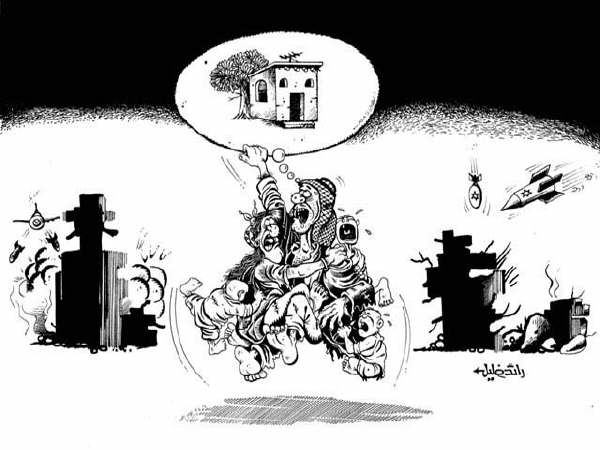
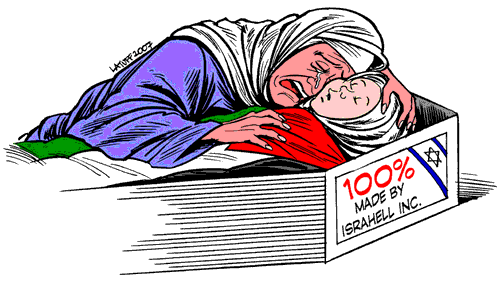


 Posts
Posts


