Palestinians condemn Israeli order:
AlJazeeraEnglish — April 12, 2010 — A new Israeli military policy could result in the eviction of tens of thousands of Palestinians from the occupied West Bank. They even risk being jailed.
Amendments to the existing 1969 order on preventing infiltration could apply to Palestinians living in the West Bank without official ID cards issued by Israel.
The Israeli army says the order was designed to "facilitate a process of judicial review of the extradition of illegal residents in the region".
But Palestinian and Israeli human rights organisations have condemned the order.
Al Jazeera's Nour Odeh reports from Ramallah in the occupied West Bank. (13 April 2010)
Palestine Video - A Palestine Vlog
Showing posts with label West Bank. Show all posts
Showing posts with label West Bank. Show all posts
Tuesday, April 13, 2010
Further Ethnic Cleansing "According to Law" - 43 Sleepless in Gaza and Jerusalem
Israel issues a mass deportation order in West Bank
43 b Sleepless Gaza Jerusalem.divx:
SleeplessinGaza — April 12, 2010 — Day 43 b: Special Edition from Jerusalem & Ramallah: So what is this new Israeli military law about? Learn who can be affected and how from Palestine Radio journalist Mohammad Abed Rabbo who has studied the law and its possible consequences. The law gives the occupation forces illegal powers that people are now reminded of the 1948 catastrophe! Anyone without an Israeli permit to reside in the West Bank is deemed an "infiltrator" and Israel can either imprison them up to 7 years or deport them! The law allows Israel's occupation forces to arrest and deport foreigners including the American and European spouses of Palestinians living in the West Bank or even Israelis who may go to the West Bank to support Palestinians or protest against the Wall for example! In other words, the Palestinian Authority has lost what it gained through Oslo & Madrid in jurisdiction on the areas it controls! Ashira hears that PLO Leader Nabil Shaath is giving the foreign and Arab diplomats a "no media allowed" briefing, so she heads to Ramallah and crashes on it. Meet Father Manuel Musallam, the retired priest who was in charge of Gaza for 14 years. 72-year-old father Manuel is originally from Ramallah but holds a Gaza ID card. He lives with his sister at their family home and fears he will be deported back to Gaza and be separated from his sister and home! What is the South African top diplomat reminded of by the new law? Nabil Shaath describes the military law as a major act of terror and ethnic cleansing. So what will he do if the Israelis deport him to Gaza and his wife to Nablus? He accepts an Israeli prison before he would allow that to happen!
43 a Sleepless Gaza Jerusalem.divx:
SleeplessinGaza — April 12, 2010 — April 12, 2010: Day 43 a: Ashira goes to visit In'am to check on her and her family in light of a new military law that can make their life even more miserable than it already is. This family has a permit to sleep at their home in Jerusalem and drive on the road from their home to the checkpoint with the West Bank, ONLY! So they can't visit the store next door, they have to travel to the West Bank, buy their groceries, travel back into their Jerusalem home without getting out of the car! How long does it take In'am to visit her mother who lives 2 minutes away? Farah is shocked at how there are two separate protests for prisoners in Gaza. Fateh was holding a protest inside of the Red Cross Headquarters, their weekly sit-in for prisoners, and Hamas called for a rally outside the same place! Meet families of prisoners on both sides including Um Ahmad whose husband now has several grandchildren that he has never met! Families of Gazan Prisoners, around 11,000, have not been able to visit their loved ones for years."
Part a
Updated April 13, 2010 11:35 A.M. EST
Analysis: "Ethnic Cleansing By Any Other Name" by Yousef Munayyer
Tuesday, April 13, 2010
Palestine Center Brief No. 195 (13 April 2010)
By Yousef Munayyer
Background
The West Bank has been occupied by Israel since 1967. Israel maintains authoritative jurisdiction over the happenings in the West Bank via its military apparatus. Decisions governing the simplest aspects of Palestinian life, from traveling from one area to another to building a home, ultimately lie under the jurisdiction of the Israeli Military’s High Command in the West Bank. In October of 2009, amendments were made to military orders governing the legitimate presence of persons in Occupied Palestinian Territory. The changes, effective six months after the signing of the orders, are beginning to take effect. It is important to note that Palestinians are not in control of the Palestinian population registry. Israel maintains strict control over this database and continues to do so. It is because of this that Israeli authorities can determine the residencies of Palestinians and only through the Israelis can the Palestinian Authority issue identification documents.
Changes in Israeli Military Orders
The main changes come as amendments to the Israeli Military Order No. 329 titled “Order Regarding Prevention of Infiltration” which was signed into effect two years after the occupation began in 1969. This order defines so-called “infiltrators” as persons who “enter the Area knowingly and unlawfully having been present in the east bank of the Jordan, Syria, Egypt or Lebanon.” In 1969, prior to peace treaties with Egypt and Jordan, infiltrators as defined by this order were persons entering the West Bank from enemy states. The amendment to this order, order number 1650, signed in late 2009 changes this definition to “a person who entered the Area unlawfully following the effective date, or a person who is present in the Area and does not lawfully hold a permit.” [emphasis added]
The original order also defines a “resident of the Area” as a “person whose permanent residence is in the Area.” The new order eliminates this definition, apparently leaving determination of residency in the hands of military commanders.
Further, the original order states that a person that is present in the West Bank without documentation of their residency bears the burden of proving that he did not infiltrate the area. The amendment changes this language significantly and simply states that any person present in the West Bank without a document or permit is “presumed to be an infiltrator.” The amendment adds that a lawful document or permit is only one that is issued by the commander of the Israeli Military in the West bank or someone acting on his behalf.
Changes have also been made to the punishments levied against those considered so-called “infiltrators”. The amendments to the order now specify that deportation orders can be carried out as early as 72 hours from the issuance of the order and in some cases even sooner. Further, the Palestinians targeted for deportation will be held liable for the expenses of their deportation up to 7,500 NIS. Under the amendment, a military commander is permitted to seize monies held by the deportee to cover the expenses.
The section of the order on the sentencing of an alleged “infiltrator” was also modified. The old statute condemned an “infiltrator” to “imprisonment of fifteen years or a fine of 10,000 Israeli Lira or both”. The new order seems to condemn Palestinians to imprisonment regardless of their innocence. Read closely the section below:
A. “The infiltrator shall be sentenced to a term of imprisonment of seven years.
B. The provisions of Subsection (A) notwithstanding, where an infiltrator has proven his entry into the area was lawful – he shall be sentenced to a term of imprisonment of three years”
A second amendment issued at the same time, Order No. 1649, establishes a committee to review deportation orders. However, hearings before this committee are for those held in custody in the process of deportation and the order stipulates that they be allowed a hearing before the committee no later than eight days from the issuance of the deportation order. The obvious problem which arises is that when deportation orders are executable in 72 hours, a Palestinian may be deported before they have a chance to have a hearing.
The collective effects of the changes made by the new orders yields an increased ambiguity that can be dangerously exploited to target Palestinians and others in the West Bank.
Implications for Palestinians Residing in the West Bank
The changes made to these orders may lead to sweeping changes in the lives of Palestinians in the West Bank. Effectively, this order makes every resident of the West Bank subject to treatment as an alleged “infiltrator” and prosecution/deportation under this order for simply being unable to produce identification on the spot or not having the ambiguously defined and potentially unattainable identification mentioned in the amendments.
Two particular Palestinian communities will face increased difficulties because of these changes: Palestinians with Gaza Residencies and Palestinians with East Jerusalem Residencies.
Palestinians from Gaza - Palestinians which are either born in Gaza or maintain permanent residence in Gaza but reside in the West Bank are now subject to prosecution/deportation under this new order. This is a clear violation of the Oslo Accord agreements which stipulated that Palestinians from Gaza and the West Bank would be treated as one nation and also a violation of international law which treats the peoples of the West Bank and Gaza as one nation under a single occupation. While it is unclear exactly how many Palestinians from Gaza are currently living in the West Bank, it is certain that this number is in the tens of thousands and possibly higher. This number has also increased in recent years as the prosperity gap between the West Bank and Gaza widened due to an Israeli siege leading many Palestinians in the Gaza Strip who were able to come to the West Bank to do so. Aside from families which may have moved from Gaza to the West Bank, many married couples in which one spouse is a resident of Gaza will face forced separation because of the change to this order. Students who have residency in Gaza but study in the West Bank are also vulnerable to prosecution/deportation under this order. While cases like this are not new, this new order will certainly expedite separation and make legal objections far more difficult, placing an insurmountable burden of proof upon Palestinians for the “crime” of living on their land.
Palestinians with Jerusalem IDs - Another group that may face difficulties because of this order are Palestinians with Jerusalem IDs. Palestinians who reside in the territory that Israel refers to as East Jerusalem number approximately 270,000. These Palestinians have Israeli issued residency cards, which gives them a status between Palestinian Citizens of Israel and Palestinian residents of the West Bank. In an attempt to annex Jerusalem’s geography without its demography, Israel permits these Palestinians residency without citizenship. Should Palestinians with Jerusalem IDs be present in the West Bank where they may have numerous family members as well as commercial ties, they too may be treated as infiltrators under this ambiguous order. It is conceivable that Palestinians with Jerusalem IDs prosecuted under this category may eventually lose their residency rights as a result of prolonged incarceration preventing the renewal of their residency.
Implications for Foreign Born Residents in the West Bank
Another category which may be targeted under the changes to this order are foreign born residents of the West Bank. People in this category are most often the spouses of native born Palestinians who reside with their families in the West Bank. A Palestinian born in Jordan, for example, who married a West Bank Palestinian will not have an Israeli issued ID proving residency in the West Bank and will therefore be subject to prosecution/ deportation under these changes.
Implications for Foreign Born visitors in West Bank
The change in definition of “infiltrator” in the old order now seems to allow for the deportation of persons who are foreign born visitors in the West Bank as “infiltrators”. Citizens of foreign countries, like the United States or the United Kingdom for example, who enter into Israel without permission to be in the West Bank can be deported. While this is not expressly stated, it is the clear outcome of the sum of the policies in place. This may be part of an ongoing Israeli effort to silence dissent and crack down on international solidarity members and activists who travel to Palestinian areas to support protests and rallies often bringing with them the eyes of the outside world. The broad language in these orders basically allow the military regime that governs the occupied West Bank to arbitrarily deport or incarcerate nearly anyone present in the area.
In sum, the changes to these orders create a dangerous ambiguity with little protection for the most vulnerable under occupation: the Palestinians. Increasingly, Palestinians find themselves in the cross hairs of policies designed to force them off their land. It is important to keep in mind that in recent years, Israel’s altering of residency policy in Jerusalem has led to a dramatic spike in residency revocations. It happened in the mid-1990s and it culminated in 2008 with a record high 4,800 residency revocations of Palestinians in Jerusalem. There is little doubt that Israel has both the motive and the tendency to use these types of policies as tools for ethnic cleansing. With such ambiguity in these orders, a history of ethnic cleansing and the capacity to carry out such horrific acts, the world should be very wary of what is happening in the Israeli occupied West Bank where Israel is charged under international law with the protection of the native population and not its endangerment. At a time when the United States and the International community have asked Israel to do more to restart peace negotiations, this is a clear and significant step in the opposite direction.
Yousef Munayyer is Executive Director of the Palestine Center. This policy brief may be used without permission but with proper attribution to the Center.
Palestine Video - A Palestine Vlog
Sunday, 11 April 2010 10:35
Israel, April 11, (Pal Telegraph) A new military order aimed at preventing infiltration will come into force this week, enabling the deportation of tens of thousands of Palestinians from the West Bank, or their indictment on charges carrying prison terms of up to seven years.
When the order comes into effect, tens of thousands of Palestinians will automatically become criminal offenders liable to be severely punished.
Given the security authorities' actions over the past decade, the first Palestinians likely to be targeted under the new rules will be those whose ID cards bear home addresses in the Gaza Strip - people born in Gaza and their West Bank-born children - or those born in the West Bank or abroad who for various reasons lost their residency status. Also likely to be targeted are foreign-born spouses of Palestinians.
Until now, Israeli civil courts have occasionally prevented the expulsion of these three groups from the West Bank. The new order, however, puts them under the sole jurisdiction of Israeli military courts.
The new order defines anyone who enters the West Bank illegally as an infiltrator, as well as "a person who is present in the area and does not lawfully hold a permit." The order takes the original 1969 definition of infiltrator to the extreme, as the term originally applied only to those illegally staying in Israel after having passed through countries then classified as enemy states - Jordan, Egypt, Lebanon and Syria.
The order's language is both general and ambiguous, stipulating that the term infiltrator will also be applied to Palestinian residents of Jerusalem, citizens of countries with which Israel has friendly ties (such as the United States) and Israeli citizens, whether Arab or Jewish. All this depends on the judgment of Israel Defense Forces commanders in the field.
The new guidelines are expected to clamp down on protests in the West Bank.
The Hamoked Center for the Defense of the Individual was the first Israeli human rights to issue warnings against the order, signed six months ago by then-commander of IDF forces in Judea and Samaria Area Gadi Shamni.
Two weeks ago, Hamoked director Dalia Kerstein sent GOC Central Command Avi Mizrahi a request to delay the order, given "the dramatic change it causes in relation to the human rights of a tremendous number of people."
According to the provisions, "a person is presumed to be an infiltrator if he is present in the area without a document or permit which attest to his lawful presence in the area without reasonable justification." Such documentation, it says, must be "issued by the commander of IDF forces in the Judea and Samaria area or someone acting on his behalf."
The instructions, however, are unclear over whether the permits referred to are those currently in force, or also refer to new permits that military commanders might issue in the future. The provision are also unclear about the status of bearers of West Bank residency cards, and disregards the existence of the Palestinian Authority and the agreements Israel signed with it and the PLO.
The order stipulates that if a commander discovers that an infiltrator has recently entered a given area, he "may order his deportation before 72 hours elapse from the time he is served the written deportation order, provided the infiltrator is deported to the country or area from whence he infiltrated."
The order also allows for criminal proceedings against suspected infiltrators that could produce sentences of up to seven years. Individuals able to prove that they entered the West Bank legally but without permission to remain there will also be tried, on charges carrying a maximum sentence of three years. (According to current Israeli law, illegal residents typically receive one-year sentences.)
The new provision also allow the IDF commander in the area to require that the infiltrator pay for the cost of his own detention, custody and expulsion, up to a total of NIS 7,500.
Currently, Palestinians need special permits to enter areas near the separation fence, even if their homes are there, and Palestinians have long been barred from the Jordan Valley without special authorization. Until 2009, East Jerusalemites needed permission to enter Area A, territory under full PA control.
The fear that Palestinians with Gaza addresses will be the first to be targeted by this order is based on measures that Israel has taken in recent years to curtail their right to live, work, study or even visit the West Bank. These measures violated the Oslo Accords.
According to a decision by the West Bank commander that was not backed by military legislation, since 2007, Palestinians with Gaza addresses must request a permit to stay in the West Bank. Since 2000, they have been defined as illegal sojourners if they have Gaza addresses, as if they were citizens of a foreign state. Many of them have been deported to Gaza, including those born in the West Bank.
One group expected to be particularly harmed by the new rules are Palestinians who moved to the West Bank under family reunification provisions, which Israel stopped granting for several years.
In 2007, amid a number of Hamoked petitions and as a goodwill gesture to Palestinian President Mahmoud Abbas, tens of thousands of people received Palestinian residency cards. The PA distributed the cards, but Israel had exclusive control over who could receive them. Thousands of Palestinians, however, remained classified as "illegal sojourners," including many who are not citizens of any other country.
The new order is the latest step by the Israeli government in recent years to require permits that limit the freedom of movement and residency previously conferred by Palestinian ID cards. The new regulations are particularly sweeping, allowing for criminal measures and the mass expulsion of people from their homes.
The IDF Spokesman's Office said in response, "The amendments to the order on preventing infiltration, signed by GOC Central Command, were issued as part of a series of manifests, orders and appointments in Judea and Samaria, in Hebrew and Arabic as required, and will be posted in the offices of the Civil Administration and military courts' defense attorneys in Judea and Samaria. The IDF is ready to implement the order, which is not intended to apply to Israelis, but to illegal sojourners in Judea and Samaria."
By: Amira Hass
Source: Haaretz
Website: www.haaretz.com
43 b Sleepless Gaza Jerusalem.divx:
SleeplessinGaza — April 12, 2010 — Day 43 b: Special Edition from Jerusalem & Ramallah: So what is this new Israeli military law about? Learn who can be affected and how from Palestine Radio journalist Mohammad Abed Rabbo who has studied the law and its possible consequences. The law gives the occupation forces illegal powers that people are now reminded of the 1948 catastrophe! Anyone without an Israeli permit to reside in the West Bank is deemed an "infiltrator" and Israel can either imprison them up to 7 years or deport them! The law allows Israel's occupation forces to arrest and deport foreigners including the American and European spouses of Palestinians living in the West Bank or even Israelis who may go to the West Bank to support Palestinians or protest against the Wall for example! In other words, the Palestinian Authority has lost what it gained through Oslo & Madrid in jurisdiction on the areas it controls! Ashira hears that PLO Leader Nabil Shaath is giving the foreign and Arab diplomats a "no media allowed" briefing, so she heads to Ramallah and crashes on it. Meet Father Manuel Musallam, the retired priest who was in charge of Gaza for 14 years. 72-year-old father Manuel is originally from Ramallah but holds a Gaza ID card. He lives with his sister at their family home and fears he will be deported back to Gaza and be separated from his sister and home! What is the South African top diplomat reminded of by the new law? Nabil Shaath describes the military law as a major act of terror and ethnic cleansing. So what will he do if the Israelis deport him to Gaza and his wife to Nablus? He accepts an Israeli prison before he would allow that to happen!
43 a Sleepless Gaza Jerusalem.divx:
SleeplessinGaza — April 12, 2010 — April 12, 2010: Day 43 a: Ashira goes to visit In'am to check on her and her family in light of a new military law that can make their life even more miserable than it already is. This family has a permit to sleep at their home in Jerusalem and drive on the road from their home to the checkpoint with the West Bank, ONLY! So they can't visit the store next door, they have to travel to the West Bank, buy their groceries, travel back into their Jerusalem home without getting out of the car! How long does it take In'am to visit her mother who lives 2 minutes away? Farah is shocked at how there are two separate protests for prisoners in Gaza. Fateh was holding a protest inside of the Red Cross Headquarters, their weekly sit-in for prisoners, and Hamas called for a rally outside the same place! Meet families of prisoners on both sides including Um Ahmad whose husband now has several grandchildren that he has never met! Families of Gazan Prisoners, around 11,000, have not been able to visit their loved ones for years."
Part a
Updated April 13, 2010 11:35 A.M. EST
Analysis: "Ethnic Cleansing By Any Other Name" by Yousef Munayyer
Tuesday, April 13, 2010
Palestine Center Brief No. 195 (13 April 2010)
By Yousef Munayyer
Background
The West Bank has been occupied by Israel since 1967. Israel maintains authoritative jurisdiction over the happenings in the West Bank via its military apparatus. Decisions governing the simplest aspects of Palestinian life, from traveling from one area to another to building a home, ultimately lie under the jurisdiction of the Israeli Military’s High Command in the West Bank. In October of 2009, amendments were made to military orders governing the legitimate presence of persons in Occupied Palestinian Territory. The changes, effective six months after the signing of the orders, are beginning to take effect. It is important to note that Palestinians are not in control of the Palestinian population registry. Israel maintains strict control over this database and continues to do so. It is because of this that Israeli authorities can determine the residencies of Palestinians and only through the Israelis can the Palestinian Authority issue identification documents.
Changes in Israeli Military Orders
The main changes come as amendments to the Israeli Military Order No. 329 titled “Order Regarding Prevention of Infiltration” which was signed into effect two years after the occupation began in 1969. This order defines so-called “infiltrators” as persons who “enter the Area knowingly and unlawfully having been present in the east bank of the Jordan, Syria, Egypt or Lebanon.” In 1969, prior to peace treaties with Egypt and Jordan, infiltrators as defined by this order were persons entering the West Bank from enemy states. The amendment to this order, order number 1650, signed in late 2009 changes this definition to “a person who entered the Area unlawfully following the effective date, or a person who is present in the Area and does not lawfully hold a permit.” [emphasis added]
The original order also defines a “resident of the Area” as a “person whose permanent residence is in the Area.” The new order eliminates this definition, apparently leaving determination of residency in the hands of military commanders.
Further, the original order states that a person that is present in the West Bank without documentation of their residency bears the burden of proving that he did not infiltrate the area. The amendment changes this language significantly and simply states that any person present in the West Bank without a document or permit is “presumed to be an infiltrator.” The amendment adds that a lawful document or permit is only one that is issued by the commander of the Israeli Military in the West bank or someone acting on his behalf.
Changes have also been made to the punishments levied against those considered so-called “infiltrators”. The amendments to the order now specify that deportation orders can be carried out as early as 72 hours from the issuance of the order and in some cases even sooner. Further, the Palestinians targeted for deportation will be held liable for the expenses of their deportation up to 7,500 NIS. Under the amendment, a military commander is permitted to seize monies held by the deportee to cover the expenses.
The section of the order on the sentencing of an alleged “infiltrator” was also modified. The old statute condemned an “infiltrator” to “imprisonment of fifteen years or a fine of 10,000 Israeli Lira or both”. The new order seems to condemn Palestinians to imprisonment regardless of their innocence. Read closely the section below:
A. “The infiltrator shall be sentenced to a term of imprisonment of seven years.
B. The provisions of Subsection (A) notwithstanding, where an infiltrator has proven his entry into the area was lawful – he shall be sentenced to a term of imprisonment of three years”
A second amendment issued at the same time, Order No. 1649, establishes a committee to review deportation orders. However, hearings before this committee are for those held in custody in the process of deportation and the order stipulates that they be allowed a hearing before the committee no later than eight days from the issuance of the deportation order. The obvious problem which arises is that when deportation orders are executable in 72 hours, a Palestinian may be deported before they have a chance to have a hearing.
The collective effects of the changes made by the new orders yields an increased ambiguity that can be dangerously exploited to target Palestinians and others in the West Bank.
Implications for Palestinians Residing in the West Bank
The changes made to these orders may lead to sweeping changes in the lives of Palestinians in the West Bank. Effectively, this order makes every resident of the West Bank subject to treatment as an alleged “infiltrator” and prosecution/deportation under this order for simply being unable to produce identification on the spot or not having the ambiguously defined and potentially unattainable identification mentioned in the amendments.
Two particular Palestinian communities will face increased difficulties because of these changes: Palestinians with Gaza Residencies and Palestinians with East Jerusalem Residencies.
Palestinians from Gaza - Palestinians which are either born in Gaza or maintain permanent residence in Gaza but reside in the West Bank are now subject to prosecution/deportation under this new order. This is a clear violation of the Oslo Accord agreements which stipulated that Palestinians from Gaza and the West Bank would be treated as one nation and also a violation of international law which treats the peoples of the West Bank and Gaza as one nation under a single occupation. While it is unclear exactly how many Palestinians from Gaza are currently living in the West Bank, it is certain that this number is in the tens of thousands and possibly higher. This number has also increased in recent years as the prosperity gap between the West Bank and Gaza widened due to an Israeli siege leading many Palestinians in the Gaza Strip who were able to come to the West Bank to do so. Aside from families which may have moved from Gaza to the West Bank, many married couples in which one spouse is a resident of Gaza will face forced separation because of the change to this order. Students who have residency in Gaza but study in the West Bank are also vulnerable to prosecution/deportation under this order. While cases like this are not new, this new order will certainly expedite separation and make legal objections far more difficult, placing an insurmountable burden of proof upon Palestinians for the “crime” of living on their land.
Palestinians with Jerusalem IDs - Another group that may face difficulties because of this order are Palestinians with Jerusalem IDs. Palestinians who reside in the territory that Israel refers to as East Jerusalem number approximately 270,000. These Palestinians have Israeli issued residency cards, which gives them a status between Palestinian Citizens of Israel and Palestinian residents of the West Bank. In an attempt to annex Jerusalem’s geography without its demography, Israel permits these Palestinians residency without citizenship. Should Palestinians with Jerusalem IDs be present in the West Bank where they may have numerous family members as well as commercial ties, they too may be treated as infiltrators under this ambiguous order. It is conceivable that Palestinians with Jerusalem IDs prosecuted under this category may eventually lose their residency rights as a result of prolonged incarceration preventing the renewal of their residency.
Implications for Foreign Born Residents in the West Bank
Another category which may be targeted under the changes to this order are foreign born residents of the West Bank. People in this category are most often the spouses of native born Palestinians who reside with their families in the West Bank. A Palestinian born in Jordan, for example, who married a West Bank Palestinian will not have an Israeli issued ID proving residency in the West Bank and will therefore be subject to prosecution/ deportation under these changes.
Implications for Foreign Born visitors in West Bank
The change in definition of “infiltrator” in the old order now seems to allow for the deportation of persons who are foreign born visitors in the West Bank as “infiltrators”. Citizens of foreign countries, like the United States or the United Kingdom for example, who enter into Israel without permission to be in the West Bank can be deported. While this is not expressly stated, it is the clear outcome of the sum of the policies in place. This may be part of an ongoing Israeli effort to silence dissent and crack down on international solidarity members and activists who travel to Palestinian areas to support protests and rallies often bringing with them the eyes of the outside world. The broad language in these orders basically allow the military regime that governs the occupied West Bank to arbitrarily deport or incarcerate nearly anyone present in the area.
In sum, the changes to these orders create a dangerous ambiguity with little protection for the most vulnerable under occupation: the Palestinians. Increasingly, Palestinians find themselves in the cross hairs of policies designed to force them off their land. It is important to keep in mind that in recent years, Israel’s altering of residency policy in Jerusalem has led to a dramatic spike in residency revocations. It happened in the mid-1990s and it culminated in 2008 with a record high 4,800 residency revocations of Palestinians in Jerusalem. There is little doubt that Israel has both the motive and the tendency to use these types of policies as tools for ethnic cleansing. With such ambiguity in these orders, a history of ethnic cleansing and the capacity to carry out such horrific acts, the world should be very wary of what is happening in the Israeli occupied West Bank where Israel is charged under international law with the protection of the native population and not its endangerment. At a time when the United States and the International community have asked Israel to do more to restart peace negotiations, this is a clear and significant step in the opposite direction.
Yousef Munayyer is Executive Director of the Palestine Center. This policy brief may be used without permission but with proper attribution to the Center.
Palestine Video - A Palestine Vlog


Monday, April 12, 2010
Beit Jala and Hebron - Another Day Under Apartheid in the Holy Land
Beit Jala and Hebron:
justicewheels — April 11, 2010 — Another day in this apartheid system ruling over the holy land. Representing the popular committee against the wall and settlements in Beit Sahour, we joined with our friends in Beit Jala, a town which lost nearly half its land to Israeli Jewish-only colonial settlements over the past four decades. Now town residents are prevented from getting to additional areas near the apartheid walls and bypass roads (all to serve illegal Jewish colonies on Palestinian land). The weekly Sunday demonstration proceeded as expected: soldiers stretching barbed wire across the road, activists speaking to those present (including soldiers) in Arabic, English, and Hebrew. There was a poignant moment when a young German girl tried to speak to a soldier who even refused to look her in the eye.
We then drove to Hebron to show a visiting teacher from Denverwhat it is like to have 400 racist settlers ruin life for 150,000 Palestinians. The settlers took over some buildings, built a few other sites and make life in this largest Palestinian city hell for its inhabitants (Hebron is largest now because cities like Nazareth, Jerusalem, and Jaffa have had much of their Palestinain population ethnically cleansed). I am trying to get a steadier hand and better editing for youtube videos of these things. Below is my latest attempt which I end by a more mundane segment showing poor children who we took to a park ( they have not been to a park for 2 years). We fed them Knaffa (Palestinian dessert) at that time but I did not have my camera then so I show what Knaffa looks like in Bethlehem with our small group that visited Hebron earlier.
Palestine Video - A Palestine Vlog
justicewheels — April 11, 2010 — Another day in this apartheid system ruling over the holy land. Representing the popular committee against the wall and settlements in Beit Sahour, we joined with our friends in Beit Jala, a town which lost nearly half its land to Israeli Jewish-only colonial settlements over the past four decades. Now town residents are prevented from getting to additional areas near the apartheid walls and bypass roads (all to serve illegal Jewish colonies on Palestinian land). The weekly Sunday demonstration proceeded as expected: soldiers stretching barbed wire across the road, activists speaking to those present (including soldiers) in Arabic, English, and Hebrew. There was a poignant moment when a young German girl tried to speak to a soldier who even refused to look her in the eye.
We then drove to Hebron to show a visiting teacher from Denverwhat it is like to have 400 racist settlers ruin life for 150,000 Palestinians. The settlers took over some buildings, built a few other sites and make life in this largest Palestinian city hell for its inhabitants (Hebron is largest now because cities like Nazareth, Jerusalem, and Jaffa have had much of their Palestinain population ethnically cleansed). I am trying to get a steadier hand and better editing for youtube videos of these things. Below is my latest attempt which I end by a more mundane segment showing poor children who we took to a park ( they have not been to a park for 2 years). We fed them Knaffa (Palestinian dessert) at that time but I did not have my camera then so I show what Knaffa looks like in Bethlehem with our small group that visited Hebron earlier.
Palestine Video - A Palestine Vlog
Friday, April 9, 2010
Friday Demo Against the Apartheid Wall in Bil'in April 9, 2010.mov
Bil'in 9.4.2010.mov:
davidreeb — April 09, 2010 — Bil'in Friday April 9th 2010 demonstration against the separation fence [Apartheid Wall] cutting through the village's land, with the participation of Palestinian, Israeli and international demonstrators. Shows Bil'in photographer Haytham Al Katib being taken away by soldiers.
Palestine Video - A Palestine Vlog
davidreeb — April 09, 2010 — Bil'in Friday April 9th 2010 demonstration against the separation fence [Apartheid Wall] cutting through the village's land, with the participation of Palestinian, Israeli and international demonstrators. Shows Bil'in photographer Haytham Al Katib being taken away by soldiers.
Palestine Video - A Palestine Vlog
Saturday, September 12, 2009
Bil'in Night Raid September 12, 2009
Bilin night raid 12.09.09 by haitham al katib:
"Bil'in night raid 12.09.09
Shortly after 2pm, the Israeli occupation forces invaded the village of Bil'in from two different directions once again. They raided two houses in an attempt to arrest Mohammed Ahmed Yasseen (age 21), and Yasseen Mohammed Yasseen (age 21). In the first house soldiers were quite aggressive during their operation. Neither of the wanted men was home at the time.
At the second house, the soldiers, disguised with face masks as usual, met a lot of resistance from Palestinian and international activists who were standing in their way and filming the event. As they did not find their victim, they eventually retreated to the four waiting Jeeps, arresting one international activist from Great Britain on their way. Yet, according to their conversation in Hebrew, they planned to release him a little further on their way toward the Apartheid Wall. He was indeed released a few minutes later before they exited through the Wall.
This has been the second night raid this week. It seems that the Israeli forces are stepping up their night raids again in Bil'in."
Palestine Video - A Palestine Vlog
"Bil'in night raid 12.09.09
Shortly after 2pm, the Israeli occupation forces invaded the village of Bil'in from two different directions once again. They raided two houses in an attempt to arrest Mohammed Ahmed Yasseen (age 21), and Yasseen Mohammed Yasseen (age 21). In the first house soldiers were quite aggressive during their operation. Neither of the wanted men was home at the time.
At the second house, the soldiers, disguised with face masks as usual, met a lot of resistance from Palestinian and international activists who were standing in their way and filming the event. As they did not find their victim, they eventually retreated to the four waiting Jeeps, arresting one international activist from Great Britain on their way. Yet, according to their conversation in Hebrew, they planned to release him a little further on their way toward the Apartheid Wall. He was indeed released a few minutes later before they exited through the Wall.
This has been the second night raid this week. It seems that the Israeli forces are stepping up their night raids again in Bil'in."
Palestine Video - A Palestine Vlog
Friday, September 11, 2009
Bil'in Friday Demo - September 11, 2009
bilin demo 11 09 09 by haitham al katib:
"Bil'in demo 11.09.09
Bil'in residents and Israeli and international activists once again held their weekly demonstration today. Despite lots of tear gas being fired by the Israeli forces, the protesters stood their ground. They displayed huge banners 'We Want Peace' in Arabic, Hebrew, and English while chanting. One demonstrator in a wheelchair was heavily tear-gased at some point and another suffered from skin burns from the gas.
Once some of the protesters had succeeded in pulling the barbed-wired inner gate open passing through it toward the Apartheid Wall, half a dozen soldiers stormed through the door in the Wall ready to arrest whoever was in the open space. However, tear gas drove them back while the protesters in the front lines retreated behind the gate. The occupation forces remained in a position of alert but no arrests were made. As the demonstrators returned to the village, the Israeli forces heavily tear-gased the house closest to the Wall where a Palestinian man was sitting watching the unfolding event.
In spite of the army's violent response to these nonviolent demonstrations and the ongoing intimidating night raids in Bil'in, the weekly demonstration continues to be held without fail. The sense of resistance to the military occupation is deeply ingrained in the people of this village. They have been resisting since the construction of the Wall five years ago, and they are determined to continue their struggle in spite of all odds."
Palestine Video - A Palestine Vlog
"Bil'in demo 11.09.09
Bil'in residents and Israeli and international activists once again held their weekly demonstration today. Despite lots of tear gas being fired by the Israeli forces, the protesters stood their ground. They displayed huge banners 'We Want Peace' in Arabic, Hebrew, and English while chanting. One demonstrator in a wheelchair was heavily tear-gased at some point and another suffered from skin burns from the gas.
Once some of the protesters had succeeded in pulling the barbed-wired inner gate open passing through it toward the Apartheid Wall, half a dozen soldiers stormed through the door in the Wall ready to arrest whoever was in the open space. However, tear gas drove them back while the protesters in the front lines retreated behind the gate. The occupation forces remained in a position of alert but no arrests were made. As the demonstrators returned to the village, the Israeli forces heavily tear-gased the house closest to the Wall where a Palestinian man was sitting watching the unfolding event.
In spite of the army's violent response to these nonviolent demonstrations and the ongoing intimidating night raids in Bil'in, the weekly demonstration continues to be held without fail. The sense of resistance to the military occupation is deeply ingrained in the people of this village. They have been resisting since the construction of the Wall five years ago, and they are determined to continue their struggle in spite of all odds."
Palestine Video - A Palestine Vlog
Wednesday, September 9, 2009
Ras Atiya Checkpoint
Ras Atiya Checkpoint:
"The checkpoint of Ras Atiya separates the villages in the seam line enclave of Ras A-Tira from the rest of the West Bank. At 6:30 AM a truck with a permit to transport building materials arrives at the checkpoint. The truck is loaded with building stones. The soldiers detain the truck for long hours and eventually force the truck owner to unload the truck at the checkpoint. The truck owner then has to pay for reloading the truck."
Palestine Video - A Palestine Vlog
"The checkpoint of Ras Atiya separates the villages in the seam line enclave of Ras A-Tira from the rest of the West Bank. At 6:30 AM a truck with a permit to transport building materials arrives at the checkpoint. The truck is loaded with building stones. The soldiers detain the truck for long hours and eventually force the truck owner to unload the truck at the checkpoint. The truck owner then has to pay for reloading the truck."
Palestine Video - A Palestine Vlog
Israeli settlers push further into Palestinian land - 8 Sept 09
Israeli settlers push further into Palestinian land - 8 Sept 09:
Note: Listen to the Zionist Colonialists/settlers at 1:49 of the video screaming "Mavit la Aravim" (Death to the Arabs.)
"Israeli settlers are pushing further into occupied Palestinian land, despite international pressure to halt settlement activity.
Hundreds of Israelis cheered as the first scoops of concrete were poured for a new settlement in an area called 'E1' northeast of Jerusalem.
A Jewish settlement there will be the final link in a chain that cuts off Palestinians in East Jerusalem from the rest of the West Bank.
Al Jazeeras Jacky Rowland reports from EI, where protesting peace activists say the settlers are sabotaging Israels chances for peace."
Comment: Jacky Rowland seems to have swallowed the Israeli government bait that Netanyahu can't survive a decision to freeze settlements/colonies, convincingly broadcasting this propaganda piece.
This calls to mind the proverb "Lord, protect me from my friends as I take care of my enemies!"
Palestine Video - A Palestine Vlog
Note: Listen to the Zionist Colonialists/settlers at 1:49 of the video screaming "Mavit la Aravim" (Death to the Arabs.)
"Israeli settlers are pushing further into occupied Palestinian land, despite international pressure to halt settlement activity.
Hundreds of Israelis cheered as the first scoops of concrete were poured for a new settlement in an area called 'E1' northeast of Jerusalem.
A Jewish settlement there will be the final link in a chain that cuts off Palestinians in East Jerusalem from the rest of the West Bank.
Al Jazeeras Jacky Rowland reports from EI, where protesting peace activists say the settlers are sabotaging Israels chances for peace."
Comment: Jacky Rowland seems to have swallowed the Israeli government bait that Netanyahu can't survive a decision to freeze settlements/colonies, convincingly broadcasting this propaganda piece.
This calls to mind the proverb "Lord, protect me from my friends as I take care of my enemies!"
Palestine Video - A Palestine Vlog
Sunday, September 6, 2009
Testimonies from the occupied Jordan Valley: Al-Hadidiya
Testimonies from the occupied Jordan Valley: Al-Hadidiya:
"A Palestinian from Al-Hadidiya in the occupied Jordan Valley. The Israeli government is making the lives of the Palestinian residents of the Jordan Valley difficult, driving them out of their homes, with the aim of evacuating the valley of [for] Israeli settlements."
Palestine Video - A Palestine Vlog
"A Palestinian from Al-Hadidiya in the occupied Jordan Valley. The Israeli government is making the lives of the Palestinian residents of the Jordan Valley difficult, driving them out of their homes, with the aim of evacuating the valley of [for] Israeli settlements."
Palestine Video - A Palestine Vlog
Ta'ayush and Internationals at Um Al Kher
Ta'ayush and Internationals at Um Al Kher:
"The Bedouin village of Um Al Kher is one of the most vulnerable inside the Occupied Palestinian Territories. The villagers were originally forced from their homes in 1948 from the Dead Sea town of Arad. They are officially registered refugees with UNRWA, and have official ownership papers for their lands.
The Israeli army have demolition orders on everything in Um Al Kher, including the tents. Everything that was built after 1984. 1984 was the year the overlooking Israeli settlement of Karmel was established. Karmel is a strategic settlement, and for this reason, there is huge pressure on the villagers to leave.
Settler outposts and roads means villagers are blocked from accessing their traditional grazings lands. If they go further, they are at risk of attack from the settlement of Ma'on.
Across the road, is a huge industrial air conditioned chicken production unit. Um Al Kher has not electricity. The Israeli army has tried to discourage involvement and assistance by international groups. Recently, the IDF sent a stern letter to Oxfam, to warn them that their assistance to this village inside militarized area C was a criminal activity. The villagers are also critical of the Palestinian Authority, which it feels has forgotten them: 'we've had an immense support of words, but nothing practical.'
This short video shows a group of Israeli and international activists trying to break the construction ban, and build a road. The IDF and the police intervene to stop the action."
Palestine Video - A Palestine Vlog
"The Bedouin village of Um Al Kher is one of the most vulnerable inside the Occupied Palestinian Territories. The villagers were originally forced from their homes in 1948 from the Dead Sea town of Arad. They are officially registered refugees with UNRWA, and have official ownership papers for their lands.
The Israeli army have demolition orders on everything in Um Al Kher, including the tents. Everything that was built after 1984. 1984 was the year the overlooking Israeli settlement of Karmel was established. Karmel is a strategic settlement, and for this reason, there is huge pressure on the villagers to leave.
Settler outposts and roads means villagers are blocked from accessing their traditional grazings lands. If they go further, they are at risk of attack from the settlement of Ma'on.
Across the road, is a huge industrial air conditioned chicken production unit. Um Al Kher has not electricity. The Israeli army has tried to discourage involvement and assistance by international groups. Recently, the IDF sent a stern letter to Oxfam, to warn them that their assistance to this village inside militarized area C was a criminal activity. The villagers are also critical of the Palestinian Authority, which it feels has forgotten them: 'we've had an immense support of words, but nothing practical.'
This short video shows a group of Israeli and international activists trying to break the construction ban, and build a road. The IDF and the police intervene to stop the action."
Palestine Video - A Palestine Vlog
Palestinian farmers (Beit Ummar) oppose Land confiscations aug 09
Palestinian farmers (Beit Ummar) oppose Land confiscations aug 09:
"On August 21st 2009, we joined local Palestinian farmers and members of Palestine Solidarity Project at a nonviolent action near the security fence [read apartheid wall] around Karmei Zur settlement. This settlement is near the village of Beit Ummar, half way between Bethlehem and Hebron.
The army have apparently agreed to allow the farmers access their land inside the fence: however, the local farmers dont see why they should have to ask the army to go to lands which they legally own. As has happened in other places, the farmers see this as the slippery slope to a permit system and eventually to being excluded altogether. (I have seen the same thing in Hebron city, where Palestinians are either barred from using certain roads, or are now required to have permits to go where they traveled freely before.)
Also present were a number of other internationals, some Israelis from Tel Aviv, as well as some journalists. The group walked to the outer security fence of the Karmi Zur settlement. Two Palestinian activists/farmers inserted papers with the slogans we will never leave our land, stop illegal building on Palestinian land on the fence'. Two of the landowners joined the group. They showed copies of ownership papers the Ottoman period.
On the video, you can see part of the new road being built, for the settlers, on Palestinian land, between the settlement and the security fence built by the military. ِِIn addition, a watchtower is going to be erected.
When the army arrived, we spoke to one of the soldiers. He was able to have a respectful talk, even though he wasnt accepting that their presence there legalized theft. Oh yes, he said, we all want peace and love. He said the fence was built after attacks on settlers by the terrorists.
The names of the families who cant access their land are Abu-Marya, Soleiby, Awwad, Abu Ayyesh, and Sabarna. Since the security fence was built, the army either prevents access, or wants farmers to co-ordinate their access with them. Several of the Palestinian farmers here are refusing to seek permission to access land which is legally theirs. They have also turned down offers of large sums of money for their land.
Polite conversation with the soldier ended when an armed and aggressive settler security person arrived. He shouted insults at the internationals, and Go back to Germany and Go back to the Holocaust to an activist who identified himself as Jewish. He then opened the gate in the fence, insisting that the army disperse the activists. We all left. The army followed behind, then randomly seized an international, who was detained then later released.
For more information about Palestine Solidarity Project, see the website: http://palestinesolidarityproject.org"
Palestine Video - A Palestine Vlog
"On August 21st 2009, we joined local Palestinian farmers and members of Palestine Solidarity Project at a nonviolent action near the security fence [read apartheid wall] around Karmei Zur settlement. This settlement is near the village of Beit Ummar, half way between Bethlehem and Hebron.
The army have apparently agreed to allow the farmers access their land inside the fence: however, the local farmers dont see why they should have to ask the army to go to lands which they legally own. As has happened in other places, the farmers see this as the slippery slope to a permit system and eventually to being excluded altogether. (I have seen the same thing in Hebron city, where Palestinians are either barred from using certain roads, or are now required to have permits to go where they traveled freely before.)
Also present were a number of other internationals, some Israelis from Tel Aviv, as well as some journalists. The group walked to the outer security fence of the Karmi Zur settlement. Two Palestinian activists/farmers inserted papers with the slogans we will never leave our land, stop illegal building on Palestinian land on the fence'. Two of the landowners joined the group. They showed copies of ownership papers the Ottoman period.
On the video, you can see part of the new road being built, for the settlers, on Palestinian land, between the settlement and the security fence built by the military. ِِIn addition, a watchtower is going to be erected.
When the army arrived, we spoke to one of the soldiers. He was able to have a respectful talk, even though he wasnt accepting that their presence there legalized theft. Oh yes, he said, we all want peace and love. He said the fence was built after attacks on settlers by the terrorists.
The names of the families who cant access their land are Abu-Marya, Soleiby, Awwad, Abu Ayyesh, and Sabarna. Since the security fence was built, the army either prevents access, or wants farmers to co-ordinate their access with them. Several of the Palestinian farmers here are refusing to seek permission to access land which is legally theirs. They have also turned down offers of large sums of money for their land.
Polite conversation with the soldier ended when an armed and aggressive settler security person arrived. He shouted insults at the internationals, and Go back to Germany and Go back to the Holocaust to an activist who identified himself as Jewish. He then opened the gate in the fence, insisting that the army disperse the activists. We all left. The army followed behind, then randomly seized an international, who was detained then later released.
For more information about Palestine Solidarity Project, see the website: http://palestinesolidarityproject.org"
Palestine Video - A Palestine Vlog
Israeli Settlers Throw Stones at Palestinian Shepherds & Internationals
Israeli Settlers Throw Stones at Palestinian Shepherds:
"Two Israeli settlers from the illegal outpost Havat Ma'on hurl stones with slingshots at Palestinian shepherds and international peace activists.
Palestinian shepherds, farmers, and schoolchildren routinely face harassment from the Israeli settlers of Ma'on and Havat Ma'on. Settlers use violence and intimidation to make privately owned Palestinian land inaccessible to Palestinians in the South Hebron hills."
Related Reports:
AL-KHALIL/HEBRON UPDATE: August 2009 Source: CPT.org 5 September 2009
When Harris went to meet a friend near the Al Sahla checkpoint, he saw two middle-aged Palestinian American men whom soldiers had detained at the checkpoint for two hours. Harris tried to notify TIPH and then called the team, but by the time Schroeder arrived, the men had been released.
Palestine Video - A Palestine Vlog
"Two Israeli settlers from the illegal outpost Havat Ma'on hurl stones with slingshots at Palestinian shepherds and international peace activists.
Palestinian shepherds, farmers, and schoolchildren routinely face harassment from the Israeli settlers of Ma'on and Havat Ma'on. Settlers use violence and intimidation to make privately owned Palestinian land inaccessible to Palestinians in the South Hebron hills."
Related Reports:
AL-KHALIL/HEBRON UPDATE: August 2009 Source: CPT.org 5 September 2009
[Note: According to the Geneva Conventions, the International Court of Justice in the Hague, and numerous United Nations resolutions, all Israeli settlements in the Occupied Palestinian Territories are illegal.]
On team during this period were Claire Evans, John Harris, Aida Hayes, Loren Peters, Paulette Schroeder, and Michael Sharp (intern).
General Situation
Although CPTers observe fewer episodes of abuse at checkpoints than they had in some months, Israeli soldiers and border police perpetrated at least two serious incidents: a beating on 8 August and a shooting on 26 August. Israeli settlers encroached on land in the Beqa'a Valley. Settler sponsored tours continued regularly through the souq (market) on Saturday afternoons, even in the midst of Ramadan crowds. Ramadan, the Muslim holy month of fasting and prayer began on August 22 and continued into the following month.
Networking
The team attended meetings of the Association of International Development Agencies working in the Occupied Territories (AIDA) (in Jerusalem on 3 August); of the Peace Teams Forum for international groups working in the West Bank (in Huwarra on 5 August); and of Palestinian, Israeli, and international nonviolent activists working in Al Khalil and Hebron District (on 18 August). The team visited Wi'am, a Palestinian conflict resolution center (in Bethlehem on 26 August). CPT was in contact with the International Solidarity Movement (ISM) and Ecumenical Accompaniment Program in Palestine/Israeli (EAPPI) throughout the month and met with the groups on 25 August to coordinate school patrol duties and other street monitoring to begin in September.
School Patrols
School was in summer break throughout the month. On 18 August, Peters and Schroeder met with the principals of Qurtuba and Ibrahimi Schools to build stronger relationships with the schools in anticipation of the upcoming academic year.
Visits to Palestinian families
The team began to visit families in vulnerable areas of the Old City of Hebron and surrounding areas to familiarize them with the work of CPT and encourage them to call the team in case of soldier or settler harassment.
Saturday 1 August
Peters and Schroeder visited the Sameeh Dana family, whose home backs up to the Kiryat Arba settlement. The family faces challenges every day because of their proximity to the settlement.
Saturday 15 August
Schroeder visited a couple and their four children at their home in the Old City. The father is apparently unemployed and the family is very poor. Schroeder visited the family again on 19 August.
Saturday 22 August
Schroeder and Evans broke Ramadan fast with another family in the Old City. The household included a couple with two sons and two daughters in their late teens or early 20s, together with the married daughter's two little girls, about two and four years old. The married daughter's husband was in prison. The family had moved to this house, newly renovated by the Hebron Rehabilitation Committee (HRC), about three weeks earlier.
Wednesday 26 August
Schroeder and Evans broke the fast with another Old City family, a woman and her four children, ranging in age from about one to ten years. The father was absent, working in Israel. The home sits across the alley from the Israeli settlement of Avraham Avinu and the family has experienced frequent harassment from settlers, including shooting into their windows. Israeli soldiers have prohibited the family from putting glass in one of their windows. This house was also renovated by HRC.
Thursday 27 August
A Palestinian partner invited Peters to join him in breaking fast at the Glassblowers' Mosque. HRC sponsored Iftar (the breaking of the fast) in a different venue inside the Old City each evening as a sign of resistance to the occupation.
Saturday 29 August
Members of the team broke fast with women from the Women's Cooperative in the Old City and at the home they had visited on 22 August. Members of EAPPI and ISM also joined in.
Settler Activity
Saturday 1 August
Hayes and Schroeder walked along Shuhada St to the Chicken Gate, just outside the CPT apartment. As they arrived, at the mini-playground Israeli settlers had created there the previous week, they were confronted by two settler boys who said, "You have no right to be here. We will hit you with a stone and kill you."
Peters, Harris, and Sharp tailed the weekly tour of the Old City sponsored by the settler community. At the second stop, two boys on the tour darted away from tour group. Soldiers quickly apprehended one boy. At least two groups of Israeli soldiers ran into the Old City with their guns drawn. The tour eventually withdrew from the center of the souq. Half an hour later, Sharp saw soldiers leading missing boy out of Old City and taking him away in a car.
Monday 3 August
Peters, Schroeder, and Hayes attempted to visit families in Tel Rumeida in the early evening. Taking a back route, they passed through the yard of a settler family. Settler women chided and photographed the team members and tried to grab Schroeder's camera. Israeli soldiers directed the three CPTers past the house. Someone within the house threw an egg at Hayes from above, hitting her in the head. The soldiers called the police, who escorted the CPTers back down to the main road. Neither the soldiers nor the police took action against the settler who assaulted Hayes.
Friday 7 August
About 10:30 a.m., Harris, Peters, and Hayes responded to a call about settler activity on the land of Mohammed Mustafa Jaber, in the Beqa'a Valley. According to Jaber, Israeli soldiers arrived in a jeep about 3:00 a.m. and took some photos. The jeep returned about 6:00 a.m. and waited at the junction of the village road and Highway 60. Forty or fifty settlers arrived between 8:00 and 9:00 a.m., accompanied by about twenty Israeli soldiers in six or seven jeeps. Settlers planted about sixty tree seedlings, each about seventy-five cm in height, on one of the family's garden terraces, sixty meters directly above the family home. The police and soldiers protected the settlers, and prevented the family from talking to them. The settlers left about 11:00 a.m. The civil administration (Israeli military) police told the Jaber family that the settlers should not be planting trees there. The family had just finished uprooting the trees from their land when CPT arrived. CPT observed the last three Israeli police leaving at that time. The family said settlers had done the same thing the previous Friday.
Saturday 8 August
Following a settler-sponsored tour in the Old City, two Jewish visitors were talking with Israeli soldiers at Al Sahla* gate, near the Ibrahimi Mosque. Nearby Palestinian shopkeepers described how one had removed his kipah (head covering) and put it in his pocket and started to walk up into the souq (market). The soldiers stopped him.
Sunday 9 August
Evans and Schroeder, with four members of Michigan Peace Team, walked up "Worshippers Way" to a synagogue outpost that had been set up by settlers about two years ago. As the group stood in front of the outpost opposite Kiryat Arba settlement, an Israeli military jeep pulled up and soldiers questioned the team's purpose there.
Tuesday 11 August
At about 11:45 a.m., Harris and two members of ISM responded again to a call about settler activity in Beqa'a Valley on Mohammed Mustafa Jaber's land. When the team arrived, residents of the Beqa'a informed them that four settlers had come and picnicked on the same land where settlers had planted trees the previous two Fridays. Ten Israeli soldiers had accompanied the four settlers.
Wednesday 12 August
CPTers observed some 150 French Jewish visitors waving Israeli flags, shouting, and processing in front of the Palestinian shops near Al Sahla checkpoint. A group of six to eight pro-Palestinian French people were visiting in the same shops. The two groups began shouting at each other. One leader and one soldier kept the groups separated.
Friday 14 August
Hayes and Schroeder with members of ISM traveled to the Beqa'a Valley where there had been settler tree-plantings on the two previous Fridays. During the several hours they spent on the land of Mustafa Jaber and other families in the Beqa'a, no settlers appeared.
Monday 17 August
A Palestinian shopkeeper was engaged in intense conversation with Israeli Border Police when Schroeder and Peters neared Al Sahla gate on midday patrol. The man explained to the team that loud music was played every day from the nearby Gutnick Center (the settler community center) from 6:30 am until 12:00 midnight. His complaints were to no avail.
Wednesday 19 August
Hayes and Schroeder discovered the Qasaba* Gate locked during morning patrol and saw five Israeli army jeeps by the Qitoun* checkpoint. Palestinian neighbors reported that Jewish holy days were beginning, but the Israeli authorities had not notified them as they had on previous years. Soldiers told members of the Israeli observer group Machsom Watch that this was the first day of the Jewish Holy Month ending with Rosh Hashanah. Large numbers of pilgrims arrived by bus for the day. Later they paraded down Shuhada Street with loud jubilant music.
Saturday 22 August
Schroeder, Evans, and Peters observed the settler tour from 4:40 to 6:10 pm. On this first day of Ramadan, the Old City was full of Palestinian men coming from prayers and shopping for Iftar. TIPH (Temporary International Presence in Hebron), ISM, and EAPPI as well as CPT accompanied the tour, which eight Israeli soldiers also escorted. The soldiers were polite as they held a path open for Palestinians who were making their way through the crowd of people on the tour. The guide spoke first in Hebrew and then in English. Schroeder asked the tour guide, "Have you told the people here that the Jews and Muslims all lived peacefully here in this city at one time?" He said in response, "There is no such person as a Palestinian. That was a name made up in the 15th century."
Thursday 27 August
A Palestinian partner of the team, who is member of the HRC, had seen a photograph of a large new water tank two days earlier near the Avraham Avinu settlement; he was afraid that indicated settlers were about to occupy another building. Peters and Schroeder photographed the area, but the photos showed no evidence of the new tank at this time.
Saturday 29 August
The weekly settler tour entered an abandoned house off the souq. Settlers had regularly invaded this house during previous Saturday tours, even when there was still an elderly Palestinian couple living there. The weekly tour of twenty-thirty visitors was again escorted by Israeli soldiers and observed by CPT, EAPPI, ISM, and TIPH. The Ramadan crowds were not as large as last week.
Soldier and Border Police Activity
Thursday 6 August
Schroeder and Peters responded to a call about a detention at the Al Sahla* checkpoint about 4:00 p.m. By the time they arrived, soldiers had released the fourteen-year-old Palestinian boy, but he was in tears after thirty minutes of detention and harassment.
Saturday 8 August
When Evans and Schroeder approached the Al Sahla checkpoint around 5:00 p.m., they saw a Border Policeman running by the checkpoint barriers. Moments later a young Palestinian boy was crying out in pain, sitting by the barrier. The young sweets seller had been beaten on the back and neck by the Border Policeman. (See article, http://cpt.org/cptnet/2009/08/21/al-khaliilhebron-israeli-soldier-assaults-palestinian-boy-near-ibrahimi-mosque.) Israeli wrote a report about the incident and called the Army captain, who also responded.
When Harris went to meet a friend near the Al Sahla checkpoint, he saw two middle-aged Palestinian American men whom soldiers had detained at the checkpoint for two hours. Harris tried to notify TIPH and then called the team, but by the time Schroeder arrived, the men had been released.
Wednesday 12 August
About 12:30 p.m., Peters and Schroeder observed a young Palestinian man standing with arms up and hands against the wall near Qitoun checkpoint. An Israeli soldier twisted one of his arms behind his back while patting down that side of the boy's body, then the other side. The soldiers released the boy after the search.
Tuesday 25 August
A Palestinian partner from the HRC and a man from the Land Research Center in Jerusalem, stopped at the CPT apartment mid-morning. They were investigating a story that had appeared in the press about the demolition of a three-story building in Al Kayal, the old produce market in the Old City. Schroeder and Evans walked to the area to document the situation, but saw no evidence of demolition.
Tuesday 25 August
Peters spoke with a family of three American Jews who had come through the Old City but were then refused entry back through the Al Sahla gate. The mother was quite upset, arguing with one soldier. When she pointed out that Peters could enter, the soldier looked at Peters and said, "You are Christian, yes."
Wednesday 26 August
About 11:00 am, the team received a call from ISM that there had been a shooting at the Tel Rumeida (Duboyya Street) checkpoint. Making their way to the scene, Schroeder, Peters, and Evans found the Qasaba Gate closed and exited the souq through gate 4/5. After soldiers prevented their going up Shuhada Street, the team went through the Palestinian cemetery and through terraced orchards to get to Tel Rumeida. ISM called about 11:20 to say the victim was being removed. Soldiers stopped the CPTers shortly before the Tel Rumeida checkpoint. TIPH and an ISM member arrived by about 11:35. The ISM member said she heard soldiers telling TIPH that a Palestinian man went through the checkpoint; when soldiers called to him and he did not stop, he reportedly pulled a knife, and two soldiers responded by firing shots, reportedly hitting him in the leg and chest. (CPT members later heard from Palestinians in the souq that the man had died; these reports subsequently proved to be false.)
Thursday 27 August
Peters and Evans watched soldiers who had stopped a man briefly at the Al Rajabi checkpoint about 9:25 a.m. The CPTers asked one of the soldiers if he had any information on the shooting the previous day. The soldier said the victim was in the hospital. A TIPH member later confirmed that the man was in stable condition in the hospital.
Friday 28 August
Peters and Schroeder observed intense Israeli military security presence near the Old City about 9:00 a.m., particularly near the Qitoun checkpoint. Hundreds of people attended the Ibrahimi Mosque for prayers. During Fridays in Ramadan, the entire building is open to Muslims and closed to Jews.
*Based on the suggestion of CPT's Advisory Council, this update uses names for the city gates and checkpoints that reflect the Palestinian neighborhoods where they are located. The list below gives the term formerly used and the new term:
Old: Ibrahimi Mosque / New: Al Qasaba
Old: Gutnick or Abed / New: Al Sahla
Old: Yatta Road / New: Qitoun or Abu Al Reesh
Palestine Video - A Palestine Vlog
Saturday, September 5, 2009
Bil'in 4 9 09 Friday demonstration against the wall
Bil'in 4 9 09 Friday demonstration against the wall:
"Bil'in demo 04.09.09-
http://www.bilin-ffj.org/index.php?op...
At today's weekly demonstration, two protesters were hit by tear gas canisters, which caused them minor skin burns. One person suffered from severe respiratory problems when being caught in heavy gas. No medical treatment was needed, however.
As the demonstrators reached the wall, the Israeli occupation forces watched passively at first. Then, some time into the gathering, multiple tear gas reached the crowd to disperse it. The protesters remained in the front lines spite of it, claiming their rights, and challenging the Apartheid Wall and the Israeli military occupation.
Some of the demonstrators tried to open the inner gate and then walked toward the Wall with Palestinian flags. They addressed the soldiers from there and attached one of the flags at the Wall. Five soldiers stormed through the door in the Wall in an attempt to arrest anyone at the Wall while tear gas clouded the area. They retreated without making any arrests.
The demonstration ended without any further incident.
Bil'in night invasion 05.09.09
http://www.bilin-ffj.org/index.php?op...
Around 2:30am, the Israeli occupation forces invaded Bil'in again. They raided two houses but no arrests were made.
They raided the house where Hamza Burnat (age 16) lives and attempted to arrest him, but he was not at home at the time. They also raided the house where Yaseen Mohammed Ali Yaseen (age 21) lives but could not find him either. And house of Mohamed Ahmed Yaseen.
During the raid at both houses, Palestinian and international activists challenged the soldiers standing guard outside. They were told that they were in a "closed military area," were not allowed to film, and that they had to go home. Since the photographer, Hamde Abu Rahma, who showed his Press ID, continued to take photos, the soldiers pointed the guns at him and chased after him at some point.
After intense arguing on both sides, the soldiers eventually retreated having not succeeded in arresting the wanted men. As the leaving Jeeps were surrounded by Palestinian and international activists, the soldiers threw several sound bombs to disperse them. The Jeeps then exited the village, driving towards the Apartheid Wall without any victims."
Palestine Video - A Palestine Vlog
"Bil'in demo 04.09.09-
http://www.bilin-ffj.org/index.php?op...
At today's weekly demonstration, two protesters were hit by tear gas canisters, which caused them minor skin burns. One person suffered from severe respiratory problems when being caught in heavy gas. No medical treatment was needed, however.
As the demonstrators reached the wall, the Israeli occupation forces watched passively at first. Then, some time into the gathering, multiple tear gas reached the crowd to disperse it. The protesters remained in the front lines spite of it, claiming their rights, and challenging the Apartheid Wall and the Israeli military occupation.
Some of the demonstrators tried to open the inner gate and then walked toward the Wall with Palestinian flags. They addressed the soldiers from there and attached one of the flags at the Wall. Five soldiers stormed through the door in the Wall in an attempt to arrest anyone at the Wall while tear gas clouded the area. They retreated without making any arrests.
The demonstration ended without any further incident.
Bil'in night invasion 05.09.09
http://www.bilin-ffj.org/index.php?op...
Around 2:30am, the Israeli occupation forces invaded Bil'in again. They raided two houses but no arrests were made.
They raided the house where Hamza Burnat (age 16) lives and attempted to arrest him, but he was not at home at the time. They also raided the house where Yaseen Mohammed Ali Yaseen (age 21) lives but could not find him either. And house of Mohamed Ahmed Yaseen.
During the raid at both houses, Palestinian and international activists challenged the soldiers standing guard outside. They were told that they were in a "closed military area," were not allowed to film, and that they had to go home. Since the photographer, Hamde Abu Rahma, who showed his Press ID, continued to take photos, the soldiers pointed the guns at him and chased after him at some point.
After intense arguing on both sides, the soldiers eventually retreated having not succeeded in arresting the wanted men. As the leaving Jeeps were surrounded by Palestinian and international activists, the soldiers threw several sound bombs to disperse them. The Jeeps then exited the village, driving towards the Apartheid Wall without any victims."
Palestine Video - A Palestine Vlog
Tent of Nations
Tent of Nations:
"In August, 2009, AIC visited the Tent of Nations, a farm situated in the middle of 4 Jewish settlements in Palestine, just southwest of Bethlehem, neighbouring the village of Nahalin.
Now in its fourth generation, the farm which harvests olive trees, grapes and other products, is under constant threat of occupation. Daoud Nassar, third generation farmer and owner of the land, along with his family, has withstood settler attacks and Israeli military lawsuits disputing his ownership.
Nassar and his family, with the the support of international volunteers and organizations, are maintaining the farm, hosting youth camps and professional workshops for women.
http://www.tentofnations.org/
Vision:
The Tent of Nations is a fulfilled dream of Bishara Nassar the Palestinian Christian who lived all his life in Bethlehem city and on the land itself. Bishara devoted his life to protecting his land. He ordained his family's land for network projects, which included a youth activity hall. Bishara died in 1976. However, his family carried on with the work to uphold the vision.
In the year 2000, friends joined the Nassar's vision and Together they found the Tent of Nations, remarking that a portion of the land was dedicated to the Tent of Nations by the Nassar family.
Today, the Tent of Nations is housed under the Bethlehem Bible College umbrella with support from Friends of Tent of Nations.
Land History:
Daher Nassar (Bishara's father) purchased this land in 1924. Since that time, many family members have worked the land by day, and slept in caves by night. The land has produced olives, grapes, and wheatetc.
In 1991, the Israeli government declared the whole area including the Nassars portion to be an Israeli state property.
The Nassar family has all the original land papers and contributed plenty of work to the land from the time of Ottoman, British, Jordanian, and Israeli governance, which shows that the Israeli government has no right to declare it because obviously the land belongs to the family since 1924 the date of purchase.
The Nassar family challenged Israel's declaration and therefore the case was brought to the court."
Palestine Video - A Palestine Vlog
"In August, 2009, AIC visited the Tent of Nations, a farm situated in the middle of 4 Jewish settlements in Palestine, just southwest of Bethlehem, neighbouring the village of Nahalin.
Now in its fourth generation, the farm which harvests olive trees, grapes and other products, is under constant threat of occupation. Daoud Nassar, third generation farmer and owner of the land, along with his family, has withstood settler attacks and Israeli military lawsuits disputing his ownership.
Nassar and his family, with the the support of international volunteers and organizations, are maintaining the farm, hosting youth camps and professional workshops for women.
http://www.tentofnations.org/
Vision:
The Tent of Nations is a fulfilled dream of Bishara Nassar the Palestinian Christian who lived all his life in Bethlehem city and on the land itself. Bishara devoted his life to protecting his land. He ordained his family's land for network projects, which included a youth activity hall. Bishara died in 1976. However, his family carried on with the work to uphold the vision.
In the year 2000, friends joined the Nassar's vision and Together they found the Tent of Nations, remarking that a portion of the land was dedicated to the Tent of Nations by the Nassar family.
Today, the Tent of Nations is housed under the Bethlehem Bible College umbrella with support from Friends of Tent of Nations.
Land History:
Daher Nassar (Bishara's father) purchased this land in 1924. Since that time, many family members have worked the land by day, and slept in caves by night. The land has produced olives, grapes, and wheatetc.
In 1991, the Israeli government declared the whole area including the Nassars portion to be an Israeli state property.
The Nassar family has all the original land papers and contributed plenty of work to the land from the time of Ottoman, British, Jordanian, and Israeli governance, which shows that the Israeli government has no right to declare it because obviously the land belongs to the family since 1924 the date of purchase.
The Nassar family challenged Israel's declaration and therefore the case was brought to the court."
Palestine Video - A Palestine Vlog
Palestinian villagers protest land seizure - 04 Sep 09
Palestinian villagers protest land seizure - 04 Sep 09:
"Hundreds of Palestinian villagers have made a short but symbolic march to the separation wall that Israel has built on their land, a non-violent protests that they regularly undertake.
Equally, the protesters, marching from the village of Bilin, are regularly met with a violent response from the Israeli army.
'The village of Bilin is literally on the frontline of Israel's confiscation of Palestinian land and the construction of its separation barrier,' Jacky Rowland, Al Jazeera's correspondent reporting from the village, said.
'Later today the villagers of Bilin will protest the fact that not only they, but also five neighbouring villages, have lost their land which has been seized to build an Israeli settlement.
'This huge settlement will result in 40,000 Jewish settlers living on occupied land here in the West Bank and as Prime Minister [Binyamin] Netanyahu is planning to give the go ahead for even more of these settlement homes to be built,' she said.
Netanyahu is set to approve plans to build hundreds of new homes on Palestinian land in the occupied West Bank, before considering US demands for a construction freeze."
Palestine Video - A Palestine Vlog
"Hundreds of Palestinian villagers have made a short but symbolic march to the separation wall that Israel has built on their land, a non-violent protests that they regularly undertake.
Equally, the protesters, marching from the village of Bilin, are regularly met with a violent response from the Israeli army.
'The village of Bilin is literally on the frontline of Israel's confiscation of Palestinian land and the construction of its separation barrier,' Jacky Rowland, Al Jazeera's correspondent reporting from the village, said.
'Later today the villagers of Bilin will protest the fact that not only they, but also five neighbouring villages, have lost their land which has been seized to build an Israeli settlement.
'This huge settlement will result in 40,000 Jewish settlers living on occupied land here in the West Bank and as Prime Minister [Binyamin] Netanyahu is planning to give the go ahead for even more of these settlement homes to be built,' she said.
Netanyahu is set to approve plans to build hundreds of new homes on Palestinian land in the occupied West Bank, before considering US demands for a construction freeze."
Palestine Video - A Palestine Vlog
Friday, September 4, 2009
The Elders in Palestine
The Elders hear first hand about life in Gaza, Bil'in and East Jerusalem:
"The Elders were unable to visit Gaza but spoke with young people and others via video link. They then went to the West Bank village of Bil'in where a local protest movement against the separation wall is gaining momentum. In the evening they visited a Palestinian family in East Jerusalem evicted from their homes by Israeli authorities."
The Elders in the West Bank: Checkpoints and politics:
"On the second day of their visit, the Elders met Israeli President Shimon Peres in Jerusalem as well as Palestinian Prime Minister Salaam Fayyad in Ramallah. On their way to the West Bank, they stopped at the Qalandia checkpoint, where hundreds of Palestinians line up daily to cross into Israel under tight security. There they met Zaina who has made the crossing many times to go to school. Zaina joined other young Palestinians in conversation with the Elders later in the day to express their frustrations with the current situation and their hopes for peace."
Desmond Tutu's message to activists: Good will prevail:
"Desmond Tutu shares his words of encouragement for those fighting for what they believe to be right."
And an interview of former U.S. President Jimmy Carter on Al-Jazeera
Carter urges halt to Israeli settlement building - 27 Aug 09:
"Former US President Jimmy Carter says a freeze on Israeli settlements is 'absolutely necessary' to achieving peace in the Middle East.
In an interview with Al Jazeera, Carter, who is currently visiting Israel as a member of the group known as the 'Elders', spoke about his views on the prospects for Middle East peace.
His comments come as Barack Obama, the US president, attempts to seal an Arab-Israeli peace deal that has eluded the region for more than six decades.
His administration has already made it clear it opposes the ongoing building of Jewish settlements on Palestinian land occupied since 1967.
Hundreds of thousands of homes have been constructed by Israel despite international condemnation and in contravention of international law."
Palestine Video - A Palestine Vlog
"The Elders were unable to visit Gaza but spoke with young people and others via video link. They then went to the West Bank village of Bil'in where a local protest movement against the separation wall is gaining momentum. In the evening they visited a Palestinian family in East Jerusalem evicted from their homes by Israeli authorities."
The Elders in the West Bank: Checkpoints and politics:
"On the second day of their visit, the Elders met Israeli President Shimon Peres in Jerusalem as well as Palestinian Prime Minister Salaam Fayyad in Ramallah. On their way to the West Bank, they stopped at the Qalandia checkpoint, where hundreds of Palestinians line up daily to cross into Israel under tight security. There they met Zaina who has made the crossing many times to go to school. Zaina joined other young Palestinians in conversation with the Elders later in the day to express their frustrations with the current situation and their hopes for peace."
Desmond Tutu's message to activists: Good will prevail:
"Desmond Tutu shares his words of encouragement for those fighting for what they believe to be right."
And an interview of former U.S. President Jimmy Carter on Al-Jazeera
Carter urges halt to Israeli settlement building - 27 Aug 09:
"Former US President Jimmy Carter says a freeze on Israeli settlements is 'absolutely necessary' to achieving peace in the Middle East.
In an interview with Al Jazeera, Carter, who is currently visiting Israel as a member of the group known as the 'Elders', spoke about his views on the prospects for Middle East peace.
His comments come as Barack Obama, the US president, attempts to seal an Arab-Israeli peace deal that has eluded the region for more than six decades.
His administration has already made it clear it opposes the ongoing building of Jewish settlements on Palestinian land occupied since 1967.
Hundreds of thousands of homes have been constructed by Israel despite international condemnation and in contravention of international law."
Palestine Video - A Palestine Vlog
Israeli soldiers fire on Al Jazeera correspondent - 04 Sep 09
Israeli soldiers fire on Al Jazeera correspondent - 04 Sep 09:
"Israeli soldiers have fired tear gas on Palestinians protesting against the Israeli separation barrier which cuts through their West Bank village.
The soldiers also fired tear gas at Jacky Rowland, Al Jazeera's correspondent who was covering the event live from near the village of Bilin."
Palestine Video - A Palestine Vlog
"Israeli soldiers have fired tear gas on Palestinians protesting against the Israeli separation barrier which cuts through their West Bank village.
The soldiers also fired tear gas at Jacky Rowland, Al Jazeera's correspondent who was covering the event live from near the village of Bilin."
Palestine Video - A Palestine Vlog
Israel: Shooting American an 'Act of War'
Israel: Shooting American an 'Act of War':
"Israel has declared the shooting of unarmed American demonstrator Tristan Anderson in the West Bank to be a act of war in a bid to avoid compensating his family."
Palestine Video - A Palestine Vlog
"Israel has declared the shooting of unarmed American demonstrator Tristan Anderson in the West Bank to be a act of war in a bid to avoid compensating his family."
Palestine Video - A Palestine Vlog
Israeli military not complying with order to protect children
At-Tuwani - Tuba School Escort for 2008-2009 School Year:
"Children from Tuba and Maghaer Al-Abeed, villages located in the Palestinian territories' South Hebron Hills, attend primary school in the village of At-Tuwani. The children walk on a road passing between the Israeli settlement of Ma'on and the illegal settlement outpost of Havot Ma'on/Hill 833. Armed settlers have harassed and attacked the children on their journeys to and from school.
In 2004 the Israeli Knesset Committee for Childrens Rights affirmed the need for an Israeli military escort for the school children along the road from Tuba to At-Tuwani. Despite the escort the children have continued to be harassed and attacked by settlers."
Palestine Video - A Palestine Vlog
"Children from Tuba and Maghaer Al-Abeed, villages located in the Palestinian territories' South Hebron Hills, attend primary school in the village of At-Tuwani. The children walk on a road passing between the Israeli settlement of Ma'on and the illegal settlement outpost of Havot Ma'on/Hill 833. Armed settlers have harassed and attacked the children on their journeys to and from school.
In 2004 the Israeli Knesset Committee for Childrens Rights affirmed the need for an Israeli military escort for the school children along the road from Tuba to At-Tuwani. Despite the escort the children have continued to be harassed and attacked by settlers."
Palestine Video - A Palestine Vlog
Friday, July 24, 2009
Saffa July 22 Fire Damage Assessment
Saffa July 22 Fire Damage Assessment:
"After nearly 40 acres of farmland in the Saffa area of Beit Ommar was set fire to by settlers on July 13, 2009, this video details the damage done to the fruit trees and grape vines in the land. After all was said and done, over 300 trees and vines were lost in the fire, comprising the majority of the crop which farmers pick. For more information on the tree replanting project and donations to the project, visit palestinesolidarityproject.org."
Palestine Video - A Palestine Vlog
"After nearly 40 acres of farmland in the Saffa area of Beit Ommar was set fire to by settlers on July 13, 2009, this video details the damage done to the fruit trees and grape vines in the land. After all was said and done, over 300 trees and vines were lost in the fire, comprising the majority of the crop which farmers pick. For more information on the tree replanting project and donations to the project, visit palestinesolidarityproject.org."
Palestine Video - A Palestine Vlog
Subscribe to:
Comments (Atom)
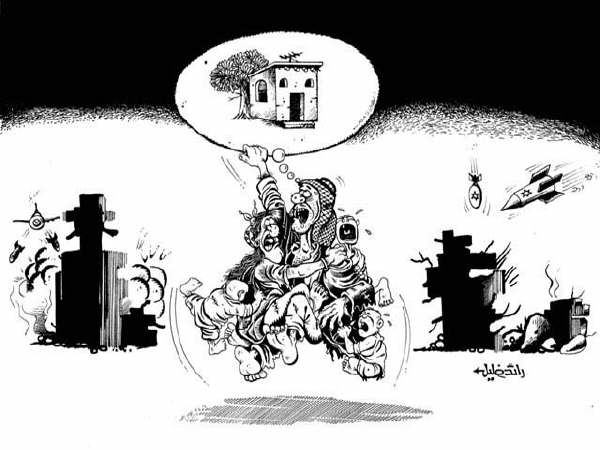
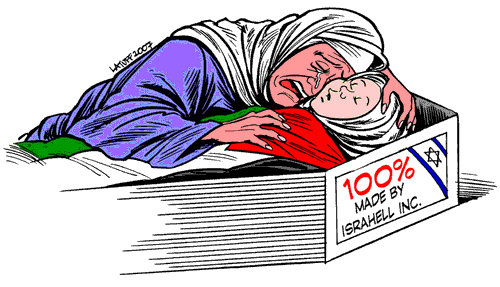


 Posts
Posts


